Establishment of a Pyranometer and Reference Cell Calibration Laboratory
Published:
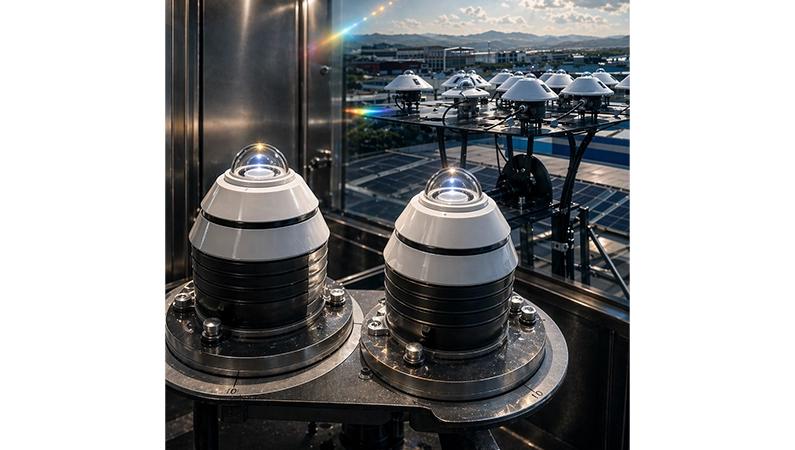
In the solar energy sector, the accuracy of irradiance measurements is the
foundation for sound decision-making. The more reliable the irradiance data
provided by pyranometers and reference cells used in the field, the more
reliable performance analysis, production monitoring, and investment
evaluations become.
BallastCo provides direct calibration services in the field of reliable
irradiance data. In addition to this service, it offers turnkey laboratory
setup solutions to enable customers to conduct calibration processes in-house.
The supported laboratory setups include pyranometer and reference cell
calibration. In other words,
BallastCo’s laboratory equipment
solutions do not merely supply equipment; they establish a functional,
sustainable, and training-supported laboratory. In this article, we will
discuss the details of the world’s only turnkey calibration laboratory setup
provided by BallastCo.
Why is Pyranometer and Reference Cell Calibration So Important?
Pyranometers and reference cells are the most critical sensors for accurately
evaluating system performance in solar power plants. Data from these sensors
are crucial for production analysis, performance ratio (PR) calculations,
maintenance decisions, and overall system validation. If these sensors are not
properly calibrated, the output of the data can be misleading. Even seemingly
small measurement deviations can lead to misinterpretations, erroneous
performance evaluations, and unnecessary costs over time.
For this very reason, establishing the right infrastructure for pyranometer
and reference cell calibration has become a vital necessity for companies
operating in the solar energy sector.
What Does a Turnkey Calibration Laboratory Setup Include?
The aim of the turnkey calibration laboratory setup approach is to establish a
fully functional and ready-to-use laboratory infrastructure tailored to the
customer's needs.
Depending on the needs of the setup projects, the necessary systems for both
indoor calibration (calibration with Sun Simulator) and outdoor calibration
are planned, installed, and commissioned. Moreover, this is not limited to the
hardware side; it is supported by special training to enable the customer to
maintain the system with their own team.
Indoor Calibration Laboratory Setup
Indoor calibration offers significant advantages in terms of being able to
perform more stable and repeatable measurements in a controlled environment.
It is a powerful solution, especially for companies that want to work
according to specific standards and make their measurement processes more
controlled.
The main components offered in indoor calibration laboratory setup are:
- Sun simulator
- Sensor mounting bracket
- Datalogger software
- Data acquisition infrastructure
- Software for creating calibration certificates
- Calibrated reference device
- Practical training
In addition, the provided datalogger software and data collection
infrastructure ensure the secure recording and monitoring of measurements. Not
only the acquisition of data, but also its accurate tracking and
interpretation is a crucial part of this process.
The training provided with the installation explains step-by-step how users
will operate the system. The logic of the calibration process, the sequence of
applications, points to consider, and data monitoring are covered within the
scope of practical training. Thus, the system becomes not just installed, but
truly usable. Practical training sessions are given either at the customer's
laboratory or at the BallastCo laboratory.
Outdoor Calibration Laboratory Setup
In some applications, it is more meaningful to take measurements under real
environmental conditions. This is where outdoor calibration infrastructure
comes into play. Studies conducted under natural sunlight provide a
significant advantage, especially for companies that take field conditions
into account. The main components we offer in outdoor calibration laboratory
setup are:
- a customized structure for mounting sensors
- Datalogger software
- Data collection infrastructure
- Software for generating calibration certificates
- Calibrated reference device
- Hands-on training
The data collection system ensures regular and reliable monitoring of
measurements taken from the field. This allows users to systematically track
and evaluate measurement results.
The mounting system is one of the most critical parts of an outdoor
installation. Correct placement of sensors, positioning them at the correct
angle, and the creation of healthy measurement conditions directly affect data
quality. Therefore, the correct design of the mechanical installation is at
least as important as the electronic infrastructure.
The training process is also extremely important in outdoor installations.
Users are given practical and detailed training on the installation, use, data
monitoring, and application steps of the system. Practical training is
provided either in the customer's laboratory or in the BallastCo laboratory.
Is it Difficult to Perform Standard-Compliant Calibration in a Calibration
Laboratory?
One of the most common problems encountered in setting up a calibration
laboratory is that, despite the physical installation of the system, the
operational side remains incomplete. Equipment is installed, software is
loaded, and connections are made; however, if the user team does not fully
embrace the process, the expected efficiency cannot be achieved.
BallastCo differentiates itself precisely at this point. The goal is for users
to be able to use their own laboratory with confidence. Therefore, in every
project, knowledge transfer, application logic, and training are given utmost
importance. These trainings can be provided either at BallastCo calibration
laboratories or on-site at the installed system, according to the customer's
request.
Laboratories are established in various ways. However, compliance with
standards and the implementation phase are extremely critical. BallastCo is
the only calibration laboratory builder that provides this knowledge transfer
service.
Why Choose a Turnkey Laboratory Setup?
It's possible to build the necessary infrastructure for pyranometer and
reference cell calibration piece by piece. However, this approach often leads
to time loss, inconsistencies, and process complexity. Working separately with
different suppliers can make equipment and software integration difficult.
More importantly, time is of the essence. Calibration services are performed
according to specific standards. Reading, testing, implementing, and
procedurally codifying these standards is a lengthy process requiring years of
accumulated knowledge and experience. Therefore, practical training is also
crucial from the customer's perspective.
BallastCo's turnkey setup model makes the entire process more efficient.
Equipment selection, system design, software infrastructure, assembly
structure, and theoretical and practical training are all considered as a
whole. Thus, the customer receives a ready-to-use laboratory infrastructure
instead of a scattered setup.
For more detailed information, please contact us.
Frequently Asked Questions
1. What does BallastCo offer in Indoor
installations?
In indoor installations, we offer a sun simulator, sensor mounting bracket,
datalogger software, data collection infrastructure, software for creating
calibration certificates, a calibrated reference device, and hands-on
training.
2. What is included in BallastCo
Outdoor installations?
On the outdoor side, we provide a customized structure for mounting sensors,
datalogger software, data collection infrastructure, software for creating
calibration certificates, a calibrated reference device, and hands-on
training.
3. Is training included in the
service?
Yes. Training is an important part of both our indoor and outdoor
installations. Our goal is not just for the customer to receive the system,
but to be able to use it effectively.
4. Who is this solution suitable
for?
It is suitable for companies working in the solar energy field that want to
increase measurement accuracy and manage their calibration processes in-house.