What is Calibration? How is Calibration Performed on Meteorological Sensors?
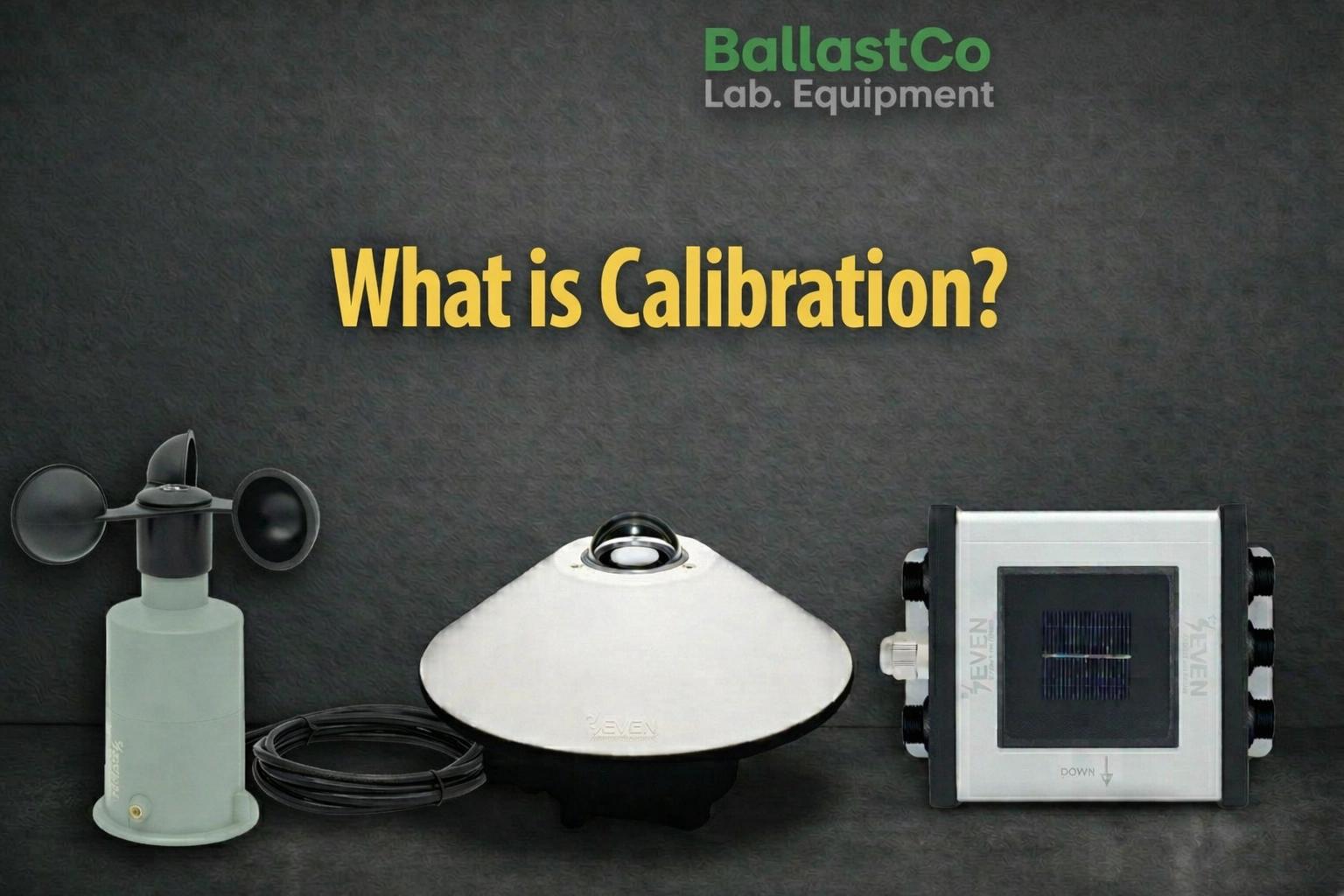
Today, it is crucial that sensors used in many fields such as energy, meteorology, environmental monitoring, and research provide accurate and consistent measurements. At this point, calibration becomes one of the most fundamental steps in ensuring the reliability of measurements. It is essential to calibrate meteorological devices, such as pyranometers, solar irradiance sensors, and wind speed and direction sensors, at regular intervals to ensure that the data obtained can be interpreted correctly.
This article will discuss what calibration means and why it is so important. In addition, Ballastco provides high-accuracy calibration services for meteorological sensors. The main advantages of these services will be examined in detail in the following sections of the article.
What is Calibration?
Calibration is the process of evaluating the accuracy of a measuring device's results by comparing them to internationally traceable reference systems.
During the calibration process:
· The sensor's measurement value
· The reference device's measurement
· Measurement error and uncertainty values are compared.
· The correction factor, i.e., the calibration value, is determined for the calibrated device.
The calibration process generally consists of the following steps:
1. Select the appropriate procedure
2. Make the necessary adjustments
3. Obtaining the data of the test sensor relative to the reference
4. Determining the calibration value
5. Preparing the calibration certificate
This process enables measuring devices to produce accurate, reliable, and repeatable results.
Why is Calibration Important?
Calibration helps measuring instruments deliver accurate, reliable, and repeatable results. That is why it holds an important place in both scientific studies and industrial applications. Over time, sensors can develop slight deviations, and these can seriously affect the accuracy of measurements.
The advantages of calibration can be summarized under several headings.
· First of all, it helps maintain measurement accuracy. Over time, sensors may experience measurement shifts known as drift. Through calibration, these deviations can be detected and corrected, allowing the device to produce accurate results again.
· Another key advantage is the ability to obtain reliable data. The accuracy of data used in meteorology and energy systems directly affects both the analyses carried out and the decisions made. For this reason, reliable measurement results are extremely important.
· Calibration is also necessary for compliance with international standards. These procedures are often performed in a way that is traceable to standards such as ISO and WMO. This helps ensure that the measurements obtained meet a certain level of quality and reliability.
· Properly calibrated sensors also contribute to improved system performance. When sensors provide accurate measurements, energy production forecasts can be made more reliably, and meteorological assessments can be carried out with greater precision.
· In addition, calibration supports quality assurance and inspection processes. Many quality management systems, such as ISO 9001, require measuring instruments to be calibrated at regular intervals. This helps organizations maintain quality standards and ensures that audit processes run more smoothly.
Thermopile Pyranometer Calibration
Thermopile pyranometers are sensors capable of measuring the total solar radiation with high precision. These devices are widely used in solar power plants, meteorological stations, climate research, and atmospheric science studies. However, over time, factors such as contamination on the sensor surface, aging of electronic components, and changes in thermopile sensitivity can lead to measurement deviations. For this reason, it is essential that thermopile pyranometers are recalibrated at regular intervals.
During the calibration of Thermopile Pyranometers by Ballastco:
· A reference pyranometer compliant with standards is used.
· An indoor or outdoor solar irradiance comparison is performed.
· Sensor sensitivity is determined.
· A new calibration coefficient is calculated and integrated into the sensor software.
These procedures ensure that calculations related to solar energy production become more accurate, consistent, and reliable.
Irradiance Sensor Calibration
Irradiance sensors are instruments used to measure the amount of radiation coming from the sun or the atmosphere. They play an important role in a wide range of fields, from solar energy systems and agricultural meteorology to climate research and atmospheric modeling studies.
When irradiance sensors are not calibrated:
· Measurement errors may occur.
· Energy efficiency analyses may be performed incorrectly.
· Research results may lose their reliability.
Ballastco's calibration steps also apply to irradiance sensors. Thanks to Ballastco's professional calibration services, the measurement accuracy of sensors is verified based on international reference standards. This ensures that the data obtained is more reliable, consistent, and usable.
Wind Speed and Direction Sensor Calibration
Wind sensors, namely anemometers and wind vanes, are among the most commonly used instruments in meteorological measurements. These sensors are used in many different fields, including wind power plants, meteorological stations, aviation, maritime operations, and environmental monitoring systems. For this reason, the accuracy of the data they provide is extremely important. Even small measurement errors in wind sensors can have a significant impact on energy production calculations.
During the calibration process of Ballastco Wind Sensors:
· Wind tunnel tests are performed.
· The sensor's response at different speeds is measured.
· Directional accuracy is checked.
· Measurement uncertainty is calculated.
· This ensures that the sensors achieve a high level of accuracy.
Ballastco’s professional calibration services play an important role in improving the reliability of measurement systemsIn other words, calibration is one of the core processes that ensures the accuracy of measuring instruments. The main benefits of these calibration services include high measurement accuracy, traceability to international standards, reliable data generation, more accurate results in energy production calculations, consistency in research data, and the preservation of long-term sensor performance. Especially in solar and wind energy projects, proper sensor calibration is critical for both investment decisions and performance analysis.
Therefore, it is recommended that measurement systems be calibrated regularly in accordance with international standards. You can contact BallastCo Laboratory Equipment for all your calibration needs.
Frequently Asked Questions (FAQ)
1. How often should calibration be performed?
Although it varies depending on the sensor type, usage conditions, and manufacturer recommendations, calibration is recommended once every two years for most meteorological sensors.
2. Why is pyranometer calibration important?
Pyranometers measure solar radiation, and this data is used in solar energy production calculations. Without calibration, energy production estimates may be inaccurate.
3. How are wind sensors calibrated?
Wind sensors are typically measured at different speeds and directions using wind tunnel tests and compared to reference systems.
4. What is a calibration certificate?
A calibration certificate is an official document that shows the standards according to which the device was tested, measurement errors, uncertainty values, and calibration values.
5. What happens if calibration is not performed?
If calibration is not performed, measurement errors in sensors increase, and this situation can negatively affect the accuracy of energy production calculations, meteorological analyses, and research results.
6. Are calibration and adjustment the same thing?
Calibration is not the same as adjustment. Calibration is the process of checking how accurately a device measures and documenting this. Adjustment, on the other hand, is intervening to bring the device's measurement closer to the correct value when necessary.
7. What are the calibration fees?
For BallastCo Calibration Services:
· The calibration fee for a thermopile pyranometer is 180 Euros.
· The calibration fee for a radiation sensor is 165 Euros.
· The calibration fee for Wind Speed and Direction Sensors is 75 Euro and 55 Euro, respectively.