Why Is the BallastCo High-Precision Wind Tunnel System Used?
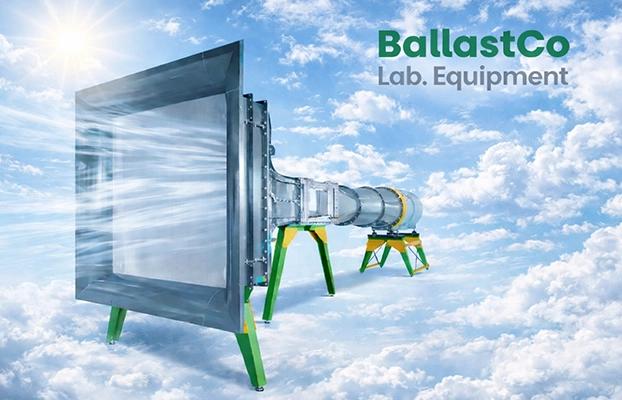
The BallastCo High-Precision Wind Tunnel System stands out as a professional platform for aerodynamic testing, featuring a transparent test chamber and a low-turbulence flow design. This allows the user to observe the airflow during testing and aim for more accurate measurements.
What Is the BallastCo Wind Tunnel System?
The BallastCo Wind Tunnel System is a controlled testing platform that
simulates natural wind patterns to evaluate product aerodynamics and the
distribution of loads on materials.
It particularly stands out with its low-turbulence performance and transparent test chamber, respectively:
- It aims to improve measurement accuracy.
- The transparent observation area makes it easier to monitor airflow and sample behavior during testing.
With these two features, BallastCo provides repeatability, observability, and measurability.
Why Are Low Turbulence and a Transparent Chamber Important in a Wind Tunnel?
1. Low turbulence means a cleaner measurement environment.
As turbulence increases, “noise” in the measurements rises, making the signal harder to interpret. Thanks to its low-turbulence performance, BallastCo improves measurement accuracy.
2. A transparent test chamber enables observable testing conditions.
Being able to see the airflow and the sample’s behavior during testing provides fast insights, especially in prototype work. BallastCo offers a wide viewing area with its transparent test chamber.
3. Controlled testing means repeatability and stability.
BallastCo is a testing platform designed to produce precise and accurate results through controlled wind tunnel tests. Repeatability is critical for R&D and quality teams.
Who Uses the Wind Tunnel System?
A wind tunnel enables different departments, teams, individuals, and industries to look at the same data.
Wind Tunnel Use for Product Development (R&D):
- - Testing the prototype’s form and geometry under wind to observe aerodynamic behavior
- - Comparing design revisions (Revision A vs. Revision B)
- - Identifying critical damage-prone areas early under wind effects
Wind Tunnel Use for Manufacturing Teams:
- - Inspecting assembly and joint/connection quality
- - Observing how the product is affected by wind-induced vibration and loads
- - Comparing behavior differences across product variations (different materials, connections, coatings, etc.)
Wind Tunnel Use for Quality Teams:
- - Recreating field complaints in a controlled environment, such as “it makes noise in the wind,” “it vibrates,” or “it loosens”
- - Running the same conditions repeatedly during root-cause analysis to obtain verifiable findings.
Which Questions Can Be Answered with a Wind Speed Test?
With BallastCo’s wind tunnel system:
- - How does the product behave aerodynamically under wind?
- - Is there load distribution or stress accumulation in specific areas?
- - Does a design change improve or worsen the wind-related performance?
- - Does visible vibration or movement occur under wind?
- - Does the structure/product generate noise under certain wind conditions (flow-induced sound)?
- - Etc.
In practice, these are examples of the types of questions that can be addressed and expanded.
Wind load is one of the key factors determining performance across numerous fields, from automotive to aerospace, and from building design to solar panel applications. The BallastCo High-Precision Wind Tunnel System stands out as a platform designed to observe product behavior under wind conditions and evaluate it through controlled testing, featuring a low-turbulence approach and a transparent test chamber design. For further questions and orders, please contact us.
Frequently Asked Questions
Q1: In which fields is a wind tunnel used?
BallastCo wind tunnel tests are used to evaluate strength and performance in systems that are directly affected by wind load.
Q2: Does BallastCo provide technical service for the wind tunnel system?
BallastCo provides technical service for all test equipment, including installation and support for any issues that may occur afterward.
Q3: What are the measurement range and specifications of the wind tunnel test equipment?
Key specifications of the BallastCo Wind Speed Tunnel include: air speed 0.4–45 m/s, turbulence ratio <1%, a 60 × 120 × 60 cm transparent test chamber, 18.5 kW fan power (52,000 m³/h), stainless flow-straightener mesh, a silencer for quiet operation, an inlet cone and diffuser system, 380V electrical connection, and adjustable speed control.