Case Study: Turning Sensor Recalibration Costs into a Calibration Laboratory Investment
Published:
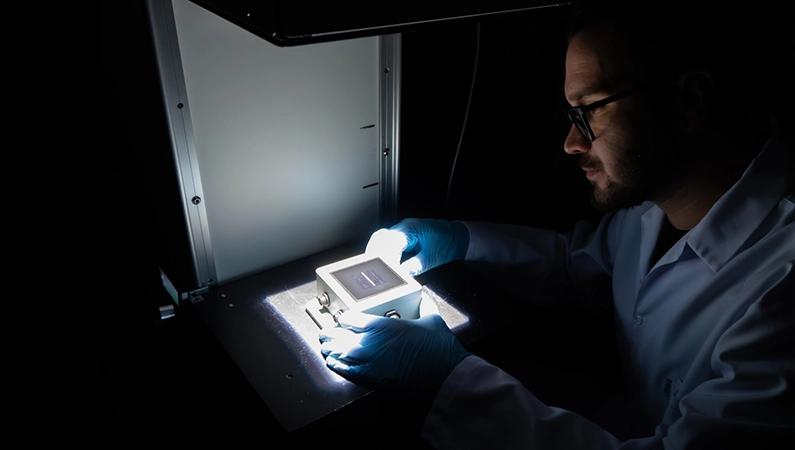
For many solar companies, irradiance sensors are purchased for one reason: to
collect reliable solar measurement data.
They install sensors on-site, use them in research projects, set them up in
monitoring stations, and equip them in their solar measurement devices. At
first sight, everything looks easy. The sensors are fresh, calibrated, and
prepared for work.
However, after one or two years of operation, a crucial question arises:
How is it going to be with all those sensors after the time comes to
calibrate them again?
This case study examines a realistic scenario. A company bought several
irradiance sensors
in 2024. Two years later, the sensors have already been used, and now they
need recalibration. The company may entrust the recalibration process to an
outside PV calibration laboratory or send them back to SEVEN for
recalibration.
Certainly, choosing an external lab initially appears to be the simplest
solution.
However, once the company calculates the full cost of recalibrating a large
number of sensors, including calibration fees, shipping, customs, downtime,
logistics, and future recalibration needs, a different idea becomes much more
attractive:
Instead of paying repeatedly for outsourced recalibration, why not build an
in-house calibration laboratory?
With the
turnkey calibration laboratory and training service
provided by BallastCo, businesses will be able to transform a recurring cost
of recalibration into a permanent technical asset. It can incorporate such
components as equipment, calibration software, certificate creation tools,
laboratory set-up services, documentation assistance, indoor/outdoor
calibration processes, and training for pyranometer/reference cell
calibration.
Before presenting the case study in detail, the following table provides a
simple cost comparison for a company that owns 30 irradiance sensors. It
compares the estimated investment required to establish an outdoor calibration
setup, an indoor calibration setup, and the cost of sending all sensors to a
third-party laboratory for recalibration.
| Outdoor Calibration Setup Cost | Indoor Calibration Setup Cost | Calibration in a Third-party Lab |
|---|---|---|
| 20.450 EUR | 36.650 EUR | 460 × 30 = 13.800 EUR |
It should be noted that the third-party laboratory cost shown in the table
includes only the calibration fee. Logistics-related expenses such as
shipping, customs clearance, insurance, administrative handling, and sensor
downtime are not included. When these additional costs are taken into
account, the total cost of outsourced calibration becomes significantly
higher. Therefore, even for companies managing 30 irradiance sensors only,
both outdoor and indoor calibration setups can recover their investment
after a maximum of two calibration cycles.
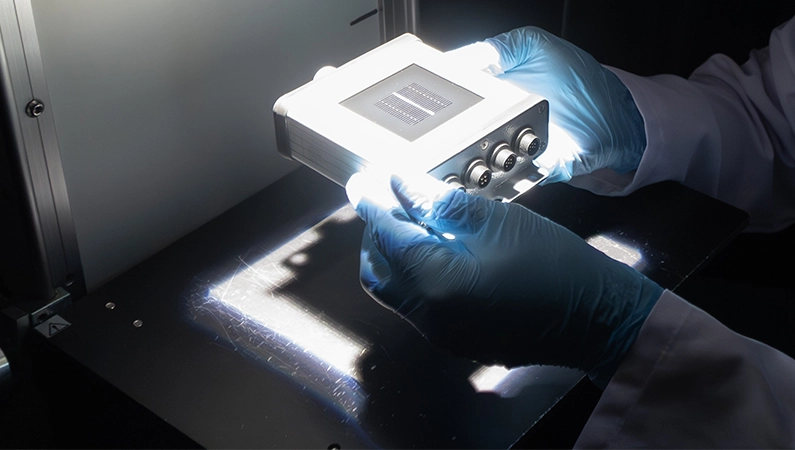
The Recalibration Challenge Companies Often Overlook
When acquiring irradiance sensors or pyranometers, the purchase cost will
become the primary concern. The team assesses the type, range of
measurements, accuracy, project needs, and delivery timeframe.
However, recalibration does not stop there.
Professional measurement devices like irradiance sensors and pyranometers
require periodic recalibrations to sustain their trustworthiness. That is
even more critical in solar power generation, photovoltaic testing, field
studies, quality management, and assessment processes.
A small number of sensors can be shipped to an external laboratory without
much difficulty.
With an extensive sensor network, everything shifts dramatically;
Recalibration will become a whole separate project.
There are sensors to collect, pack, ship, track, recalibrate, receive,
inspect, and redeploy. During this time, the company may lose access to
important measurement equipment. If the sensors are used in active projects,
downtime can create additional pressure.
This is where recalibration becomes more than a technical task. It becomes a
cost, logistics, and planning challenge.
The Scenario: A Large Sensor Quantity Reaches Its Recalibration Period
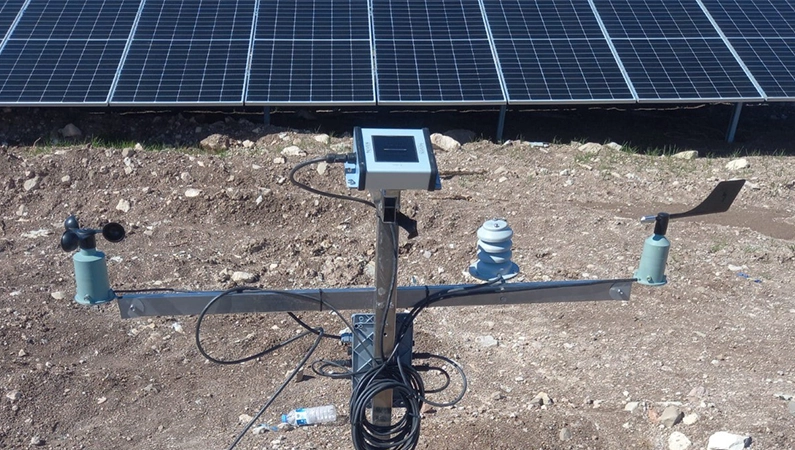
In the given scenario, the company acquired 200 irradiance sensors in 2024.
After about two years of use, it was time to recalibrate the sensors.
There were two options for the company at that moment:
1. Send the sensors to a third-party PV calibration lab or have them
recalibrated by SEVEN.
2. Create their own calibration lab using BallastCo's products and
services.
The first choice resolves the issue at hand.
The second choice not only addresses the current situation but also enables
future calibration capabilities.
That difference is what makes the case interesting.
How Outsourcing Recalibration Can End Up Costly
Outsourcing recalibration can seem easy if we only consider its price per
each irradiance sensor or pyranometer. However, in reality, the overall cost
can be much higher.
For multiple irradiance sensors or pyranometers, outsourcing can consist of:
- The cost of calibrating each sensor
- Shipping within the country or abroad
- Customs duties
- The cost of packing and shipping
- The cost of administrative services
- The waiting period at an external laboratory
- The cost of returning the sensors
- The risk of transportation damage
- Shelf time for each sensor
- The cost that will need to be paid repeatedly every two years
Once we factor in all these variables, the cost can add up significantly.
More importantly, the organization pays for this cost without acquiring any
capabilities to perform recalibration itself.
The next time the irradiance sensors need recalibration, the process repeats
itself once more.
The Turning Point: When Recalibration Becomes an Investment Opportunity
There comes a time when the company needs to ask itself a different
question.
It isn’t only about:
How much does calibration cost us in this year?
It should also include:
Is the same amount better invested in developing our capacity for
calibration?
The company arrived at an answer by considering how many sensors it had
coming up for calibration.
Sending a significant number of sensors for recalibration to an independent
PV lab or even back to SEVEN may cost more than setting up a calibration lab
in-house using the training and equipment package from BallastCo.
This turns the situation upside down.
Instead of seeing recalibration as an unavoidable expense, the company can
treat it as the starting point for a new technical asset.
The BallastCo Solution: Build the Laboratory, Keep the Capability
The
BallastCo turnkey calibration laboratory
solution and training services are intended for companies interested in
setting up their own calibration laboratory for pyranometers, reference
cells, and solar irradiance sensors.
This service is not just equipment procurement; it includes also the entire
practical basis necessary for running a calibration lab.
Depending on the chosen configuration, BallastCo may assist with:
- Laboratory layout planning
- Equipment procurement
- Indoor calibration procedures
- Outdoor calibration procedures
- Principles and practice of calibration
- Traceability and documentation
- Data acquisition
- Software for calibration
- Software for certificate creation and printing
- Best practices for reproducible results
- Laboratory operations guidance
- Theory and practice training
Training may take place at the ArGesim manufacturing site in Türkiye or the
customer’s premises.
For a company facing a large recalibration workload, this means the team
does not only receive a laboratory. It also receives the know-how to operate
it.
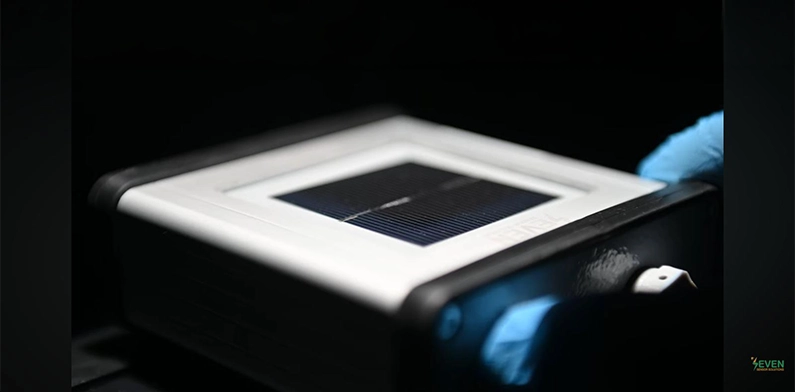
The Financial Logic: Full Benefit After 100–200 Sensor Calibrations
One of the most compelling aspects of the given situation from the financial
perspective is the potential return on investment.
It is possible to receive a return on all expenses associated with setting
up the calibration laboratory in BallastCo within approximately 100 to 200
irradiance sensor or pyranometer calibrations.
That number of calibrations will depend on the cost of external calibration
services, transportation, customs fees, volume of calibration, and various
conditions.
In the current situation, the company has already accumulated 200 irradiance
sensors requiring calibration.
This implies that the company will be able to receive its investment in full
during the first calibration cycle.
While spending the whole budget on external services, it is possible to
spend this money on:
- Equipment for the company itself
- Trained employees of the company
- Software programs used by the company
- The certification procedure developed by the company
- The company's calibration process
After that, every additional recalibration can create even more value.
Internal Laboratory vs Outsourced Recalibration
Outsourced Recalibration
Recalibration by outsourcing could prove effective for companies having a
limited number of sensors.
However, if a company owns numerous sensors, outsourcing will most likely
result in recurring expenses, delays, transportation hazards, and lack of
scheduling flexibility.
The company will receive calibrated sensors; however, it will not benefit
from developing skills in this domain.
In-House Calibration Laboratory
A calibration laboratory within the company entails an initial cost, but
it offers greater control.
The company acquires equipment, software, protocols, documentation
capabilities, trained staff, and scheduling flexibility.
For companies having periodic recalibration requirements, this can be the
smarter investment.
The Hidden Cost of Waiting
Many companies delay the decision to establish a calibration laboratory
because they see it as a future project.
But waiting can also be expensive.
Year by year, there could be additions to the number of sensors used
within the company. Sensors bought within various years will definitely
require recalibration. In effect, the company will have to bear the costs
associated with external calibration on a cyclical basis.
Consider the following scenario:
- Sensors bought in 2024 will require recalibration once their service periods are over.
- Sensors bought in 2025 will have to be recalibrated sooner or later.
- Sensors bought in 2026 will have to be recalibrated at some point.
- The next project's sensors will add to the cycle.
Without an internal laboratory, every cycle brings the same external
cost and logistics burden.
With an internal laboratory, each cycle strengthens the value of the
original investment.

Operational Benefits Beyond Cost Savings
Cost saving is important, but it is not the only benefit.
An in-house calibration laboratory can also improve speed, planning,
quality, and technical independence.
More efficient turnaround time
Recalibration can take place depending on the schedule of the company’s
projects instead of being based on the schedule of an external
laboratory.
It is highly advantageous for situations where recalibration is required
for use at an active PV plant, a solar monitoring system, testing of the
production batch, or delivery to customers.
Reduced downtime
If sensors are sent out, they cannot be used.
Having a company laboratory, the processes of recalibration can be
organized in batches. This way the company will be able to keep their
projects going and manage sensors.
Improved quality control
Calibration will become part of the company’s quality process.
As a result, the technical department will have better control over such
things as data collection, document management, certificates creation
and general laboratory activity.
Greater independence in technical matters
The company will not have to rely fully on external laboratories for all
calibration procedures.
Calibration training from BallastCo provides the customer’s technical
staff with knowledge regarding calibration procedure, methodology,
indoor and outdoor activities, traceability, documentation, data
collection, and certificate creation.
Greater Customer Confidence
With its own calibration capabilities, a company will be able to react
faster to customer demands, better help customers understand technical
details, and prove greater control over measuring equipment.
The Lessons this Case Study Imparts
The company began with a widespread problem:
There were many irradiance sensors that needed to be calibrated after
two years of work.
The straightforward approach would have been to send the sensors either
to an outside PV laboratory or to SEVEN company for servicing.
However, taking the costs into account, the company decided that there
had to be other solutions as well. And indeed, for large batches of
irradiance sensors, outsourcing turned out to be a lot more expensive
than establishing your own calibration laboratory.
Having selected BallastCo’s turnkey calibration laboratory system and
training course, the company has managed to turn sensor recalibration
into a long-lasting internal process.
The message is clear:
If you have many irradiance sensors or pyranometers, don’t treat
recalibration as a mere expense. It is your chance to acquire a
dedicated calibration laboratory within your company.
Recalibration of sensors owned by companies having only a handful of
devices can be outsourced.
For companies with 100–200 or more sensors, the in-house laboratory
option becomes much more attractive.
FAQ: Sensor Recalibration Costs and Calibration Laboratory Investment
Why is recalibration of irradiance sensors necessary?
Recalibration is essential to ensure accurate measurements, reliable
results, and consistency in solar monitoring, PV testing, and
performance assessment.
Why would the recalibration of sensors become costly when outsourced?
The recalibration of sensors through outsourcing entails several
factors, which could lead to high-cost estimates such as recalibration
charges, shipment expenses, customs, insurance, administration,
downtime, etc. The costs would be higher depending on the number of
sensors that will undergo calibration.
Should you opt for sending your sensors to a PV lab or creating your
own laboratory?
Sending your sensors to an external PV lab will be ideal if the number
of sensors is not too many, while creating a laboratory will provide
benefits in the long run if the number of sensors is huge or if there is
a need to calibrate them repeatedly.
Why will it cost you less to build your own calibration laboratory
rather than sending your sensors to SEVEN?
Calibrating large numbers of sensors may require costs such as
calibration charges, transportation, customs, logistics, and downtime.
In some cases, the total cost can exceed the investment needed to
establish an internal calibration laboratory with BallastCo’s equipment
and training support.
How can BallastCo assist in the process of setting up a calibration
laboratory?
With BallastCo, a company can receive a full turnkey service for
calibration lab set up, including the provision of equipment,
calibration software, certification program, indoor/outdoor calibration
processes, documentation preparation, and training.
How many sensors need to be recalibrated to ensure that the investment
pays off?
Depending on the price for external calibration, shipping, customs fees,
number of sensors to calibrate, etc., the payback period for investing
in BallastCo's training and equipment would be around 100–200 sensors
for calibration.
What happens after the first sensors were recalibrated?
The laboratory will keep generating benefits by providing further
recalibrations for other sensors produced in different years, future
sensor batches, replacement sensors, etc.
Are pyranometers able to undergo calibration within the laboratory
alongside irradiance sensors?
Yes. The program of BallastCo enables calibration of pyranometers,
irradiance sensors, and reference cells depending on the chosen
configuration of the laboratory.
Does BallastCo have the ability to supply indoor calibration
equipment?
Yes. BallastCo is able to supply indoor calibration equipment like a
Class AAA sun simulator, sensor delivery device, datalogger, software
for calibration, data acquisition software, and software for
certification.
Does BallastCo have the ability to conduct outdoor calibration?
Yes. BallastCo is able to use customized sensor calibration stands and
sunlight-based calibration process for outdoor calibration.
What standards do you apply in your calibration laboratory program?
The standards that are applied by the calibration laboratory program
include ISO 9847:2023, IEC 60904-2:2023, IEC 60904-4:2019, IEC
60904-9:2020, and ISO/IEC 17025:2017.
Would a calibration laboratory work for just one cycle of
recalibration?
No. Calibration laboratory represents an investment in technology that
can help with future recalibrations, quality control, customer service,
tests, and future purchases of sensors.
Who should consider building an in-house calibration laboratory?
Companies with regular recalibration needs, large sensor quantities,
solar monitoring projects, PV testing operations, irradiance sensor
inventories, or recurring pyranometer calibration requirements should
consider building an in-house calibration laboratory.