How Does the Solar Panel Production Process Work with a PV Lamination Machine?
Published:
Solar panel production is a multi-stage industrial process aimed at
transforming photovoltaic cells into a durable, reliable, and high-efficiency
module structure while protecting them from environmental factors. This
process consists of complementary production stages such as material
selection, cell arrangement, electrical connection formation, layer assembly,
lamination, framing, and quality control.
One of the primary pieces of equipment in this production line is the
lamination machine. In this article, we will discuss the role of the mini
lamination machine in solar panel production processes.
Why is solar panel production such a delicate process?
From the outside, a solar panel may look like a flat surface covered in glass.
But behind the scenes, it involves glass, EVA, solar cells, a back sheet,
heat, vacuum, pressure, and extremely careful process control. Even a small
error can affect the panel’s efficiency, lifespan, and durability.
That is why the goal in modern production lines is not merely to produce
panels. The goal is to produce reliable, repeatable, and long-lasting PV
modules. The
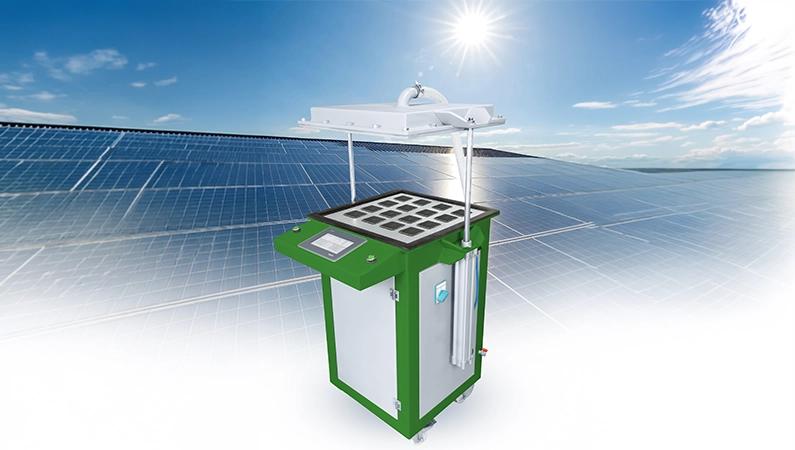
Ballastco Laboratory-Grade PV lamination machine
is used to combine glass, EVA, solar cells, and the back sheet into a single
module by applying vacuum, temperature, and pressure.
Key stages of the solar panel manufacturing process
1. Material preparation
The first step in production is preparing the correct materials. The key
layers in solar panel manufacturing are as follows:
- Front glass
- EVA (Ethylene Vinyl Acetate)
- Solar cells
- Backsheet
Each of these layers plays a distinct role in the panel’s performance. The
glass provides protection against external factors. EVA wraps around the cells
to secure and protect them. The solar cells generate energy. The backsheet
provides insulation and structural integrity on the panel’s rear side. The
document notes that the lamination machine is specifically designed to bond
these layers together.
2. Layer Assembly
At this stage, the panel’s “sandwich structure” is formed. The typical
sequence follows this logic:
- Glass on top
- EVA underneath
- Solar cells in the middle
- Then another encapsulation layer
- Backsheet at the bottom, or a second layer of glass depending on the module design
3. Lamination
The BallastCo Mini PV lamination machine bonds the layers using vacuum,
temperature, and pressure. Thanks to its advanced heating system, high
temperature uniformity is ensured; the robust vacuum infrastructure and
PLC-based control system make the process reliable and repeatable.
Additionally, PID-based temperature control ensures uniform temperature
distribution across the working surface, supporting optimal curing of the EVA.
Why is the lamination process so important?
If lamination is not done properly, air pockets, adhesion issues, and
performance degradation over time may occur within the panel. When done
properly, however, the panel:
- Becomes more durable
- Has a longer lifespan against outdoor environmental conditions
- The cells are better protected
- Production quality becomes more consistent
Key Benefits of the BallastCo Laboratory-Grade Lamination Machine
Some key advantages of the device:
- High-quality vacuum system
- Quick and easy setup
- Long-lasting performance
- Low noise level and minimal maintenance requirements
- Compact laboratory solution
- 1-year warranty and customer support
These features are particularly important for small-scale production, R&D
work, or laboratory-type panel testing.
In other words, the
BallastCo Laboratory-Grade PV lamination machine
contributes to reliable module production by bonding glass, EVA, solar cells,
and the back sheet under vacuum, temperature, and pressure. Thanks to its
PLC-based control, PID temperature management, automatic operation mode, and
compact design, it offers a robust solution in terms of both quality and
efficiency. Please contact us for more detailed information.
Frequently Asked Questions (FAQ)
1. How does the solar panel production
process work?
In short: materials are prepared, layers are arranged, then the lamination
process is performed, and final inspections are completed. One of the most
critical stages is the lamination process, where the layers are transformed
into a single module.
2. Why is lamination so important?
Because the panel’s durability and longevity depend largely on this stage.
Proper lamination ensures the layers bond together smoothly.
3. What materials is the PV lamination
machine compatible with?
The mini PV lamination machine works with glass, EVA, solar cells, and the
backsheet. It is also compatible with glass-backsheet and glass-glass modules.
4. What is the temperature range of the
lamination machine?
The temperature range of the BallastCo Lamination Machine is between 0 °C and
200 °C. This provides a flexible and controlled production process.
5. How long does the PV lamination
process take?
The PV lamination process takes approximately 15 minutes. The preheating time
is approximately 20 minutes.
6. Why is vacuum used in lamination
machines?
Vacuum prevents air from remaining between the layers. This makes the panel
stronger and of higher quality.