Is Laboratory Simulation Necessary in Aging Tests?
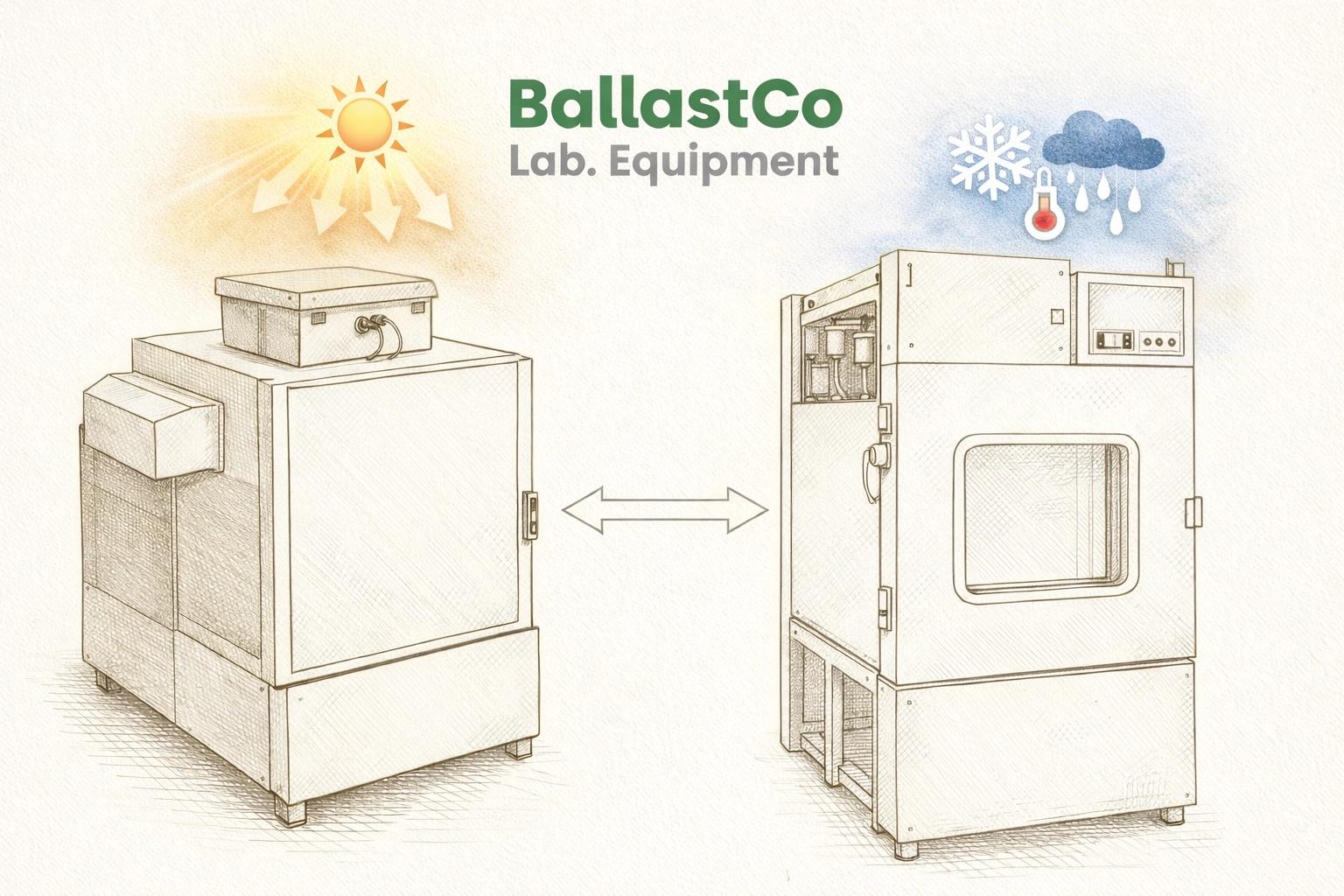
Testing products in the field during aging tests is realistic, but slow. Laboratory simulation is faster and more repeatable. When a climate chamber and a UV test chamber are used together, tests can be carried out with both speed and strong correlation to field conditions. Potential product failures can be detected early, and future quality-related costs can be reduced.
Why is aging testing critical for products?
Aging testing reveals performance degradation over time as a product is used under environmental stresses such as temperature, humidity, UV/light exposure, wetting–drying cycles, thermal cycling, and material interactions. If real field effects are not properly simulated and detected early in the laboratory, it increases the risk of warranty-related recalls and leads to more customer complaints.
What is the natural aging process in the field like?
The natural aging process in real field conditions is an indispensable and highly realistic test method. However, on its own, it cannot keep up with the speed required for product development (R&D).
Its main strengths include:
· It includes the real combined effects of UV, temperature, humidity, pollution, wind, and similar environmental factors.
· The product is evaluated in its normal application environment, including installation orientation, shade/sun exposure, user behavior, and maintenance conditions.
· It is used as a reference benchmark for laboratory testing.
Its main weakness include:
· The process is slow; it may take months or even years.
· Each product is exposed to different levels of UV radiation, wetting duration, and temperature.
· It can be difficult to isolate and identify the specific factor responsible for a failure.
What is the aging process like in laboratory simulation?
In laboratory conditions, two test chambers cover the two main dimensions of aging in a controlled and accelerated manner:
Climate chambers apply controlled stresses such as low/high temperature, dry/wet environments, and temperature changes or cycling. For example, issues such as cracking or loosening caused by differences in thermal expansion, moisture diffusion–related failures in electronics, and deformations in coatings, adhesives, or seals can be detected at an early stage.
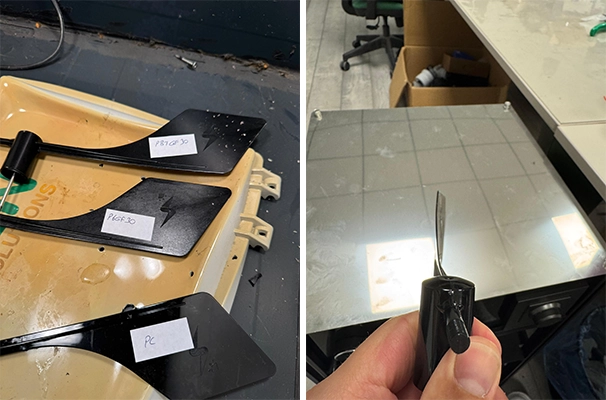
UV-induced degradation can be identified through effects such as fading, yellowing, chalking, microcracking, and loss of mechanical strength. For instance, UV-related changes in color or gloss, breakdown of coating resins, surface cracking, and loss of adhesion can be detected early.
Field vs. Laboratory Aging Test
|
Criterion |
Field Exposure |
Laboratory (Climate + UV Cabinets |
|
Realism |
Extremely high |
Medium–high |
|
Repeatability |
Low |
Extremely high |
|
Feedback speed |
Low |
Extremely high |
|
Cause–effect separation |
Hard |
easy |
|
Adaptation to the product development cycle |
Weak |
Strong |
Field exposure in aging tests shows real-world performance, while laboratory simulation produces fast, repeatable data that supports engineering decisions. For product reliability, these two approaches are not alternatives—they complement each other.
For more information, feel free to contact us.
Frequently Asked Questions
Q1: What is a climate chamber?
A climate chamber is a testing enclosure used to evaluate the effects of
environmental conditions on biological samples, industrial products,
materials, electronic devices, and their components.
Q2: If a UV chamber is available, is a climate chamber still
necessary?
UV-related damage often becomes visible under temperature and humidity
cycling, such as cracking, swelling, or loss of adhesion. Therefore, even if
a UV chamber is used, a climate chamber is also required to observe the full
range of effects.
Q3: Does accelerated testing exactly replicate field conditions?
It is not realistic to expect an exact match. The goal is to correctly
trigger failure mechanisms and comparatively differentiate products. For
this reason, correlation with real field conditions is critical.
Q4: Where can I purchase the Climate Chamber and UV Test Chamber?
You can purchase the Climate Chamber and UV Test Chamber manufactured and sold by BallastCo Laboratory Equipment.
Q5: What is the price range for UV Test Devices?
UV Test Device prices generally range from 2,200.00 to 4,100.00 USD.
Q6: What are the operating ranges of the Climate Chamber and UV Test Device?
The Balastco Climate Chamber operating range allows for significant environmental testing with a temperature range of -40°C to 120°C and a humidity range of 20–90%. The Balatco UV Test Device focuses on accurately measuring UV resistance with programmable UV lamps, timer-controlled test cycles, homogeneous light distribution, and precise temperature-humidity control.
Q7: Are technical service options available for the Climate Chamber and UV Test Device?
Yes, installation and technical service are available for every test equipment purchased from Ballastco. Please contact us for any purchase-related or technical inquiries.