Calibration Processes in Photovoltaic Radiation Sensors and Pyranometers: Advantages of Laboratory Setup
Mücahit YILDIZ
Published:
Pyranometers and radiation sensors are used in performance and efficiency
measurements of solar power plants. The measurement accuracy of the devices
varies over time depending on environmental factors and the internal structure
of the products. According to international standards (ISO9060 and IEC60904),
it is mandatory to calibrate pyranometers and radiation sensors at least once
every 2 years to ensure the accuracy of data and the reliability of site
analyses.
Two Main Methods in Calibration Management
Companies generally calibrate sensors using one of the options specified
below:
1. Authorized organizations: sensors used in the field are sent to an
authorized -accredited- laboratory to be calibrated. However, this method
has some disadvantages. These are; logistics processes, waiting queue time
due to intensity of calibration period, and loss of regular data
collection and regular analysis due to sensors staying away from the
field.
2. Calibration process in an In-House Laboratory: This option emerges as the
most optimum solution for companies that have a large number of sensors
within their structure. This choice is an advantageous solution both in
terms of operational speed and long-term cost management.
Turnkey Laboratory Solutions with ArGesim Technology
Sensor calibration competence is provided to companies by ArGesim Technology
firm by following the requirements of world standards (ISO 17025 and IEC
compliant). Turnkey laboratory installation service includes the items
specified below.
ISO 17025 Approved Reference Sensors
Secondary reference devices are defined as devices calibrated by an
accredited organization, which is one of the important requirements of
calibration conditions, metrological traceability. These devices are
provided to users by Argesim Technology as included in the service
provided. 2 reference sensors are recommended for business continuity and
to be used in case of any mishap. This option is presented as optional.
Companies can procure this product within their own structure.
Class AAA Solar Simulator (IEC 60904-9)
One of the most
important elements that will determine the quality of calibration is the
Solar Simulator -artificial light source- that simulates Solar light to be
used. The device to be used meets Class AAA requirements in terms of
spectral match, spatial uniformity, and temporal stability according to
the IEC 60904-9 standard. The class of the solar simulator directly
affects the uncertainty of the sensor; therefore, the class of the solar
simulator is of importance.
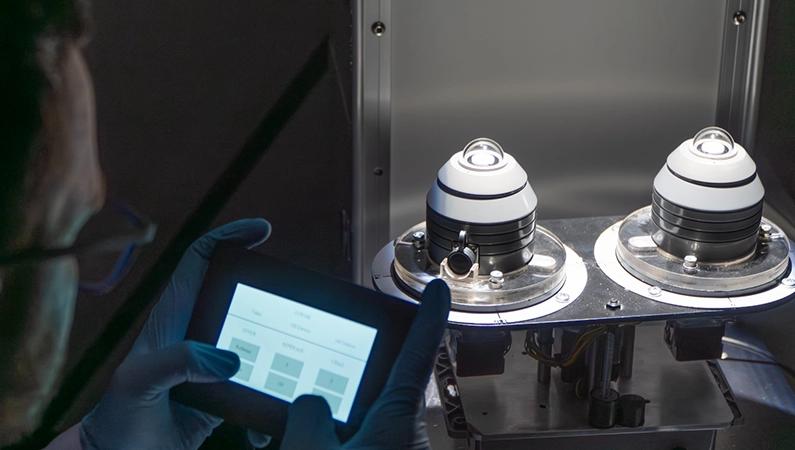
Product-Specific Calibration Stand (Mechanism)
For the sensor
to be calibrated using a secondary reference device, its distance to the
light and angular balance are of critical importance for accurate
measurement. It represents the mechanical structure required for the
calibration to be equivalent and applied without error. Thanks to this
structure, the error rate that may arise from positioning will be
minimized.
High Precision Data Acquisition System - Data Logger
Calibration data provided by the solar simulator is recorded by the data
logger. The query speed of the provided data logger is quite short, which
ensures that the analysis results are more reliable. Data loggers with
high query speed offer flexibility to be used optionally within the
company in special applications and R&D tests.
Automatic Calibration and Certification Software
Our
software, specially developed by our company according to ISO 17025
requirements, makes the calibration procedure mentioned in the standards
fully automatic. Our software, specially developed by Argesim technology,
makes the calibration procedure automatic based on the requirements of
ISO17025 standards. Automatically performed calculations minimize human
error. It directly converts the results into the appropriate certificate
format. Thus, it saves time and ensures reliable results by minimizing the
margin of error.
Know-How Transfer and Technical Training
Along with device
installation, we provide comprehensive training to personnel who will
perform calibration on how to perform calibration according to standards
(IEC/ISO). The training covers both theoretical and practical application
processes at the laboratory.
Why Should You Set Up Your Own Laboratory?
- Time Savings: Calibrate whenever you want, independent of the lead times and logistical delays of external laboratories.
- Cost Efficiency: Minimize external service costs and logistical expenses in the medium and long term.
- Data Security and Control: Minimize data loss and conduct optimum analysis without the need for devices to leave the facility.
- R&D Flexibility: In addition to periodic calibrations, use the laboratory infrastructure for new product development -P-D- tests as well.
As Argesim, we carry the measurement accuracy of sensors to international
standards. You can contact our sales team for detailed information and project
planning regarding the standard-compliant calibration laboratory to be
established within your own structure.
Frequently Asked Questions
Why should radiation sensors be calibrated?
They must be calibrated to maintain the accuracy of the data received from the sensor and to perform SPP performance analyses accurately.
How often should pyranometers be calibrated?
Based on the relevant IEC standards, it is recommended to be calibrated at least once every 2 years.
After laboratory installation, is theoretical or practical training provided to personnel?
Yes, after the laboratory setup is completed, theoretical and practical calibration training is given to the personnel/personnel specified by the company.
Is the Argesim laboratory installation solution turnkey?
Yes, it performs turnkey laboratory installation together with the device, mechanical infrastructure, software, practical and theoretical training.
Is a certificate issued at the end of calibration?
Yes, a standard-compliant certificate is generated via the software provided by Argesim.
Which standards does Argesim follow in laboratory setup?
Installation is performed considering ISO 17025, IEC 60904, and ISO 9060 requirements.
Can an Argesim Class AAA solar simulator be offered?
Yes. A Class AAA solar simulator solution compliant with IEC 60904-9 can be offered.