Turnkey Calibration Laboratory Setup: Why Your Company Should Build Its Own Calibration Lab
Ouijdane BENAMAR
Published:
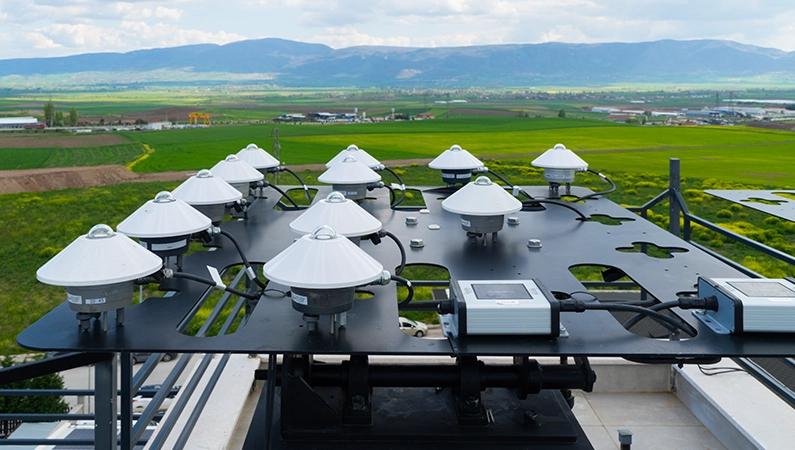
When it comes to businesses dealing with solar energy, photovoltaic testing,
pyranometers, reference cells, and irradiance sensors, accurate measurements
are no small issue. They constitute the very basis of success, reputation, and
quality.
But despite all the obvious advantages, many companies continue to rely on
external calibration laboratories fully. This results in lengthy delays,
additional expenses, lack of flexibility, and reduced control.
This is one of the reasons why more and more solar energy companies,
laboratories, manufacturers, research institutions, and quality departments
decide to set up their own calibration lab.
With the assistance of the comprehensive turnkey calibration lab setup offered
by BallastCo, you will be able to design and run your own calibration lab
based on international standards, without reinventing the wheel.
What Is a Calibration Laboratory?
A calibration lab is a technical environment where measuring devices are
calibrated using reference standards to ensure their precision.
When it comes to solar applications, calibration labs are typically used for:
- Pyranometers
- Reference Cells/Irradiance Sensors
Why? It’s all about ensuring that the measuring equipment gives accurate and
reliable results.
In the solar energy sector, even minor inaccuracies in measurements could
impact performance evaluations, testing, energy output estimates, product
validation, and quality assurance judgments.
Why Establish Your Own Calibration Laboratory?
1. Get Faster Calibration Results
Using third-party services for calibration may delay the process. There is a
need to ship, schedule, receive, perform calibration, and return the sensors.
If you are among the many firms that require regular calibration of their
sensors, you might incur costs and frustrations from the process.
Having your lab will enable you to manage the calibration processes based on
your schedule. You will eliminate any delays, plan better, and prevent
disruptions to testing, manufacturing, customer care, or scientific
experiments.
2. Cut Down the Cost of Calibration Services
Third-party calibration services may lead to recurring costs. The expenses
could range from paying for the service, shipping nationally or
internationally, clearing customs if applicable, , and other related costs.
It takes an investment to establish your lab, but it can help to cut down the
expenses of organizations that regularly deal with solar sensors.
For companies with regular calibration needs, an internal laboratory can
become a long-term cost-saving asset.
Return on Investment: Full Benefit After Few Calibrations
Among the strongest business cases for developing an in-house calibration lab
is the return on investment.
Even with the initial costs involved in training, buying equipment, installing
software, setting up the laboratory, and developing the staff, the cost
incurred in setting up the calibration lab will be fully recovered after
calibrating around 100 to 200 irradiance sensors or pyranometers based on the
number of calibrations performed, external costs, transportation cost, import
procedures, among others.
A business which frequently performs calibration of solar irradiance sensors,
pyranometers, reference cells, or any device for irradiance measurement would
find it rather costly to outsource every single one of those calibrations
since each calibration involves service costs, transportation, waiting times,
administrative costs, and possibly delayed projects.
With BallastCo’s turnkey laboratory installation services and trainings
program, a business will not only get to save money from the outsourcing but
also acquire its own set of equipment, staff, software, documentation
procedure, and calibration method.
From this point onwards, the calibration lab will continue providing returns
by:
- Reduction in calibration cost per sensor
- Savings on turnaround time
- Low dependence on outside labs
- Increased control over calibration schedule
- Stronger quality assurance process
- Servicing customers
For organizations handling many irradiance sensors or pyranometers each
year, a calibration laboratory is not only a technical improvement. It
becomes a long-term investment that supports cost savings, operational
independence, and stronger measurement reliability.
3. Build Internal Technical Know-How

Knowledge is one of the most significant benefits of setting up your own
calibration laboratory.
Your employees will get familiarized with the process of calibration, how to
operate the equipment, what is the right way to collect data, how to report
results, and how laboratory activities should be run.
By providing both theory and practice, BallastCo allows your staff to gain
comprehensive knowledge of what calibration means and how it is done.
As a result, your company becomes more knowledgeable about the technical
processes and ready for further development of your laboratory.
4. Open Up a New Business Opportunity
Your calibration laboratory can give you access to new commercial
possibilities.
In accordance with the scope of your business and your future plans
regarding laboratory certification, having your calibration laboratory may
enable you to provide the following services:
- Internal calibration
- Support in customer calibration
- After-sales services
- Product validation
- Research and development
- Tech consultancy
- External calibration in the future
Such an opportunity would be valuable especially for companies that operate in
the solar and photovoltaic field.
How BallastCo Makes Calibration Laboratory Setup Easy
A calibration laboratory requires more than purchasing equipment alone.
You need the correct arrangement, reference equipment, light source, sensor
delivery device, data logging system, software, documentation, process, and
training.
BallastCo provides assistance in bringing together all these necessary
components in one package.
Some of the services provided could include:
- Laboratory layout design
- Selection and supply of equipment
- Indoor calibration process
- Outdoor calibration process
- Principles and methods of calibration
- Help on traceability and documentation
- Calibration certificate writing
- Software for calibrating and data presentation
- Hands-on training
The service is customizable based on the needs of the customer.
Indoor Calibration Laboratory Setup
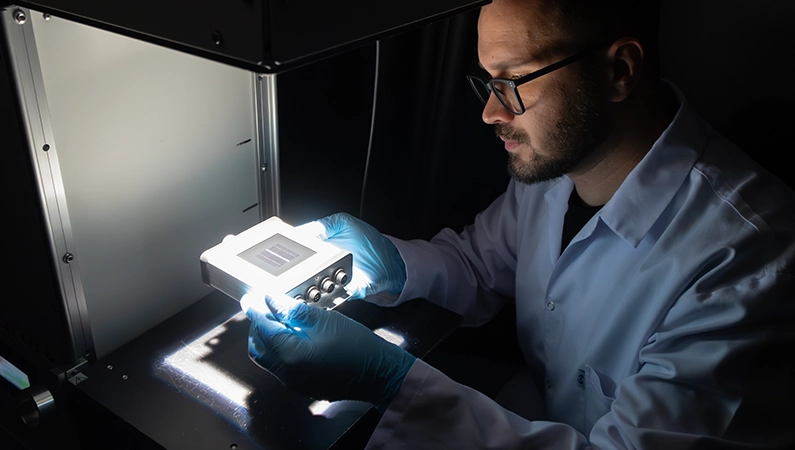
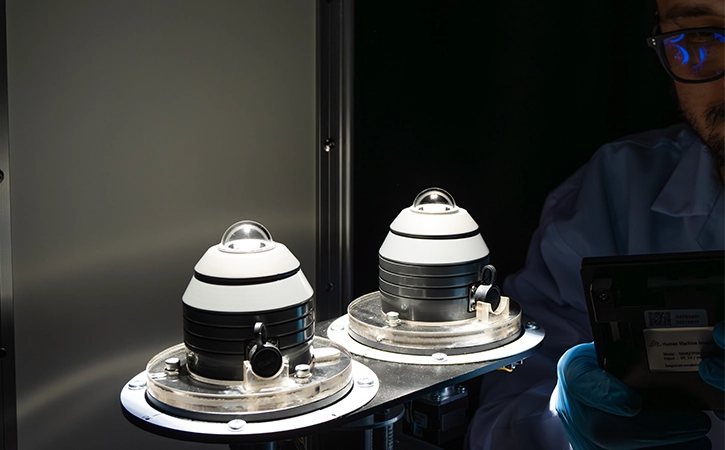
Indoor calibration laboratories enable you to calibrate sensors through
artificial lighting.
BallastCo will supply some of the required equipment in establishing an indoor
calibration lab which includes Class AAA sun simulator per IEC 60904-9, sensor
delivery mechanism, datalogger compatibility, data acquisition software,
calibration software, and certification creation software.
Indoor calibration is recommended to those companies that prefer controlled
laboratory tests.
Outdoor Calibration Laboratory Setup
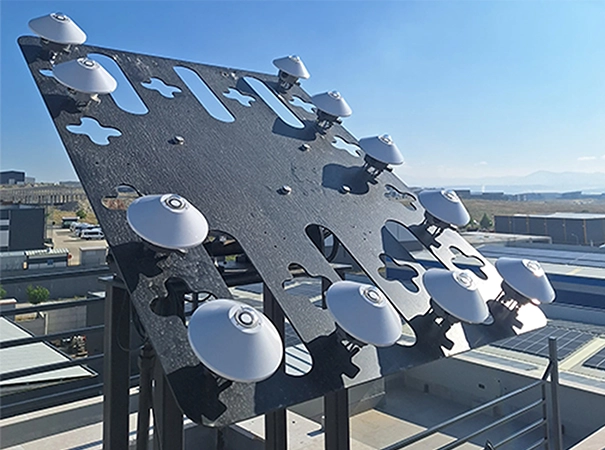
Outdoor calibration uses actual sunlight in conjunction with specialized
mounting equipment.
BallastCo will be instrumental in establishing an outdoor calibration
laboratory by offering customized sensor calibration stands and using natural
sunlight in conducting calibration.
Outdoor calibration will be appropriate for organizations that require natural
sunlight for calibration purposes.
Equipment and Software for a Calibration Laboratory
Depending on the selected configuration, BallastCo can provide the main
equipment and tools needed for a calibration laboratory.
These may include:
- Class AAA sun simulator
- Sensor delivery mechanism
- Calibration stand
- Datalogger
- Data acquisition software
- Calibration software
- Certificate creation and printing software
- Customized outdoor mounting systems
- Reference sensor guidance
- Practical training and operational support
The sensor delivery device can be customized for pyranometer calibration or
reference cell calibration.
Calibration Laboratory Standards
The proper calibration laboratory must adhere to international standards
recognized by the industry.
The BallastCo calibration laboratory configuration and training program
utilizes standards such as:
- ISO 9847:2023; standard on calibrating pyranometers
- IEC 60904-2:2023; standard on reference devices for photovoltaics
- IEC 60904-4:2019; standard on reference solar devices
- IEC 60904-9:2020; standard on solar simulators classification
- ISO/IEC 17025:2017; competence of laboratories standard
These standards enable the process of calibration to become more repeatable
and professionally documented.
Who Needs a Calibration Laboratory?
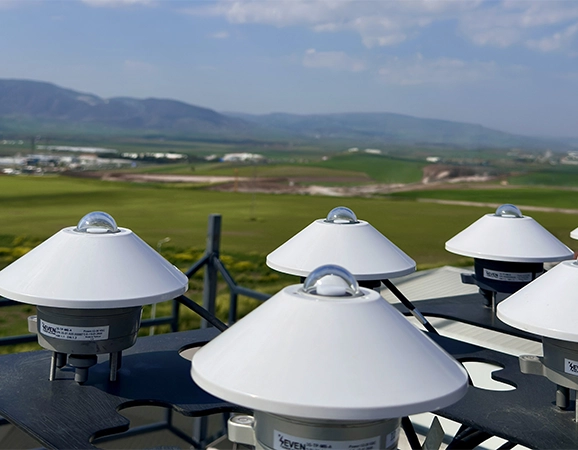
A calibration laboratory can be considered beneficial for organizations
related to solar measurements, photovoltaic testing, or sensor production.
Among which we can highlight:
- Solar energy companies
- Photovoltaic modules testing laboratories
- Meteorological measurement companies
- Research and development departments
- Universities and technical colleges
- Quality control departments
- After-sale service companies
If your company deals regularly with solar measurement sensors, it might
benefit from the establishment of a calibration laboratory.
Why Choose BallastCo for Calibration Laboratory Setup?
BallastCo offers a practical, turnkey solution for companies that want to
establish their own calibration laboratory.
Instead of only supplying equipment, BallastCo supports the full laboratory
development process.
You receive guidance on equipment, workflow, software, documentation, indoor
and outdoor calibration methods, certificate preparation, and personnel
training.
This makes the process faster, easier, and more reliable for companies that
want to build calibration capability without developing every detail alone.
With BallastCo, the customer does not only receive laboratory equipment. The
customer receives a complete technical pathway for building, operating, and
improving a calibration laboratory.
Why BallastCo is the Right Choice for Your Calibration Lab Setup?
BallastCo provides a practical approach for organizations interested in
establishing their own calibration laboratory.
The company not only supplies equipment but assists you throughout the whole
process of establishing your laboratory.
Guidance will be provided for you with regards to equipment needed,
workflows, software, documentation, indoor and outdoor calibration
procedures, certificate issuance and personal training.
Such an approach allows organizations to set up their own calibration lab
much faster and more easily than if they had to develop all the necessary
information independently.
With BallastCo, the customer does not buy just laboratory equipment. You get
a comprehensive technical guide on how to create, operate and improve your
calibration laboratory.
What BallastCo Can Offer?
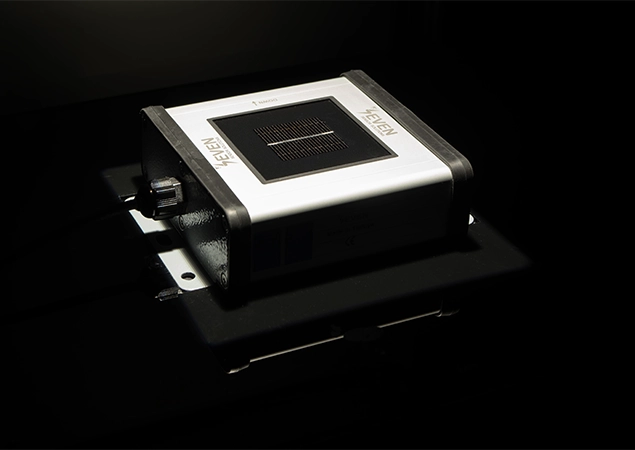
Benefits achieved with the help of BallastCo include:
- Quick turnaround of calibration services
- Low dependence on other labs in the long run
- High measurement reliability
- Increased quality control in-house
- Useful training for laboratory staff
- Capability of indoor and outdoor calibration
- Professional documentation assistance
- Calibration certificates preparation
- Specific laboratory setup for your applications
- More technical independence
- Pyranometer and reference cell calibration
- Return on investment after 100-200 sensor calibrations
Your organization can benefit from a calibration laboratory setup by
BallastCo.
Build Your Own Calibration Laboratory with BallastCo
Building a calibration laboratory is a wise choice for organizations which
require exact solar radiation measurements.
It saves time, increases accuracy, controls costs, and develops in-house
technical knowledge.
BallastCo facilitates building a whole calibration laboratory and training
service for pyranometers, reference cells, and solar irradiance sensors.
Be it an indoor calibration laboratory, outdoor calibration set-up, or
both, we at BallastCo will be able to create one according to your
specifications.
If your organization seeks quick calibration, greater assurance, cost
savings, and enhanced technical skills, developing a calibration lab with
BallastCo is what you should do next.
FAQ: Turnkey Calibration Laboratory Setup
What is a turnkey calibration laboratory installation?
A turnkey calibration laboratory installation refers to a solution that
will assist a company in setting up their calibration laboratory. This can
include equipment, software, lab design, calibration process flow,
documentation assistance, certificate creation software, and training.
Why should I build my own calibration laboratory?
Building your own calibration laboratory will decrease reliance on other
calibration services, shorten response time, increase quality control,
lower costs, and provide opportunities for technical know-how in your
company.
What equipment is required for a calibration laboratory?
Required equipment may include a reference sensor, sun simulator, sensor
positioning apparatus or calibration frame, datalogger, data collection
software, calibration software, and certificate generation software.
BallastCo can supply major equipment and assist based on the chosen
option.
Does BallastCo offer installation services for pyranometer calibration
laboratories?
Yes. BallastCo offers support for building a pyranometer calibration
laboratory.
Does BallastCo offer installation services for reference cell
calibration laboratories?
Yes. BallastCo can assist in creating a reference cell calibration
laboratory with appropriate equipment and software.
Is indoor calibration equipment offered by BallastCo?
Yes. BallastCo is capable of supplying indoor calibration equipment such
as the Class AAA solar simulator according to IEC 60904-9, sensor delivery
system, dataloggers, software, and certification software.
Is outdoor calibration offered by BallastCo?
Yes. Outdoor calibration services provided by BallastCo involve
custom-built mounts along with solar calibration techniques.
What standards does BallastCo use for the calibration laboratory
program?
The international standards applied for BallastCo calibration laboratory
program include ISO 9847:2023, IEC 60904-2:2023, IEC 60904-4:2019, IEC
60904-9:2020, and ISO/IEC 17025:2017.
Does BallastCo offer any training for the staff of the calibration
laboratory?
Yes. Theoretical and practical training programs are provided by BallastCo
for calibration laboratories. Training sessions can take place either at
the ArGesim manufacturing plant in Türkiye or at the client's site.
Is customization of the calibration laboratory possible?
Yes. Each laboratory can be individually customized taking into
consideration sensor type, calibration scope, room availability,
technology objectives, existing laboratory equipment, as well as indoor
and outdoor calibration preferences.
How many sensors must be calibrated to justify return on investment?
In general, the sum of expenses associated with the BallastCo training and
equipment kit may prove beneficial for about 100 to 200 calibrations of
irradiance sensors or pyranometers, considering external calibration
costs, shipping fees, customs clearance...
From the moment of recoupment, each following calibration will become more
economically advantageous due to the use of laboratory equipment and staff
training by the company itself rather than repeatedly paying for external
calibration services.
Do solar companies need a calibration lab?
Absolutely. The use of a calibration laboratory enables solar companies to
enhance accuracy, facilitate photovoltaic (PV) testing, calibrate
irradiance sensors, boost quality control, and offer improved technical
support to their customers.
How can I launch my calibration laboratory project with BallastCo?
For this purpose, it is necessary to outline the scope of your calibration
activities, sensors that require calibration, equipment at your disposal,
laboratory premises, and whether indoor or outdoor calibration, or both,
are required.