Solar Simulators (Sun Simulator): What Are They, What Are They Used For, Their Place in R&D and Test Processes, and Classification Criteria
Mücahit YILDIZ
Published:
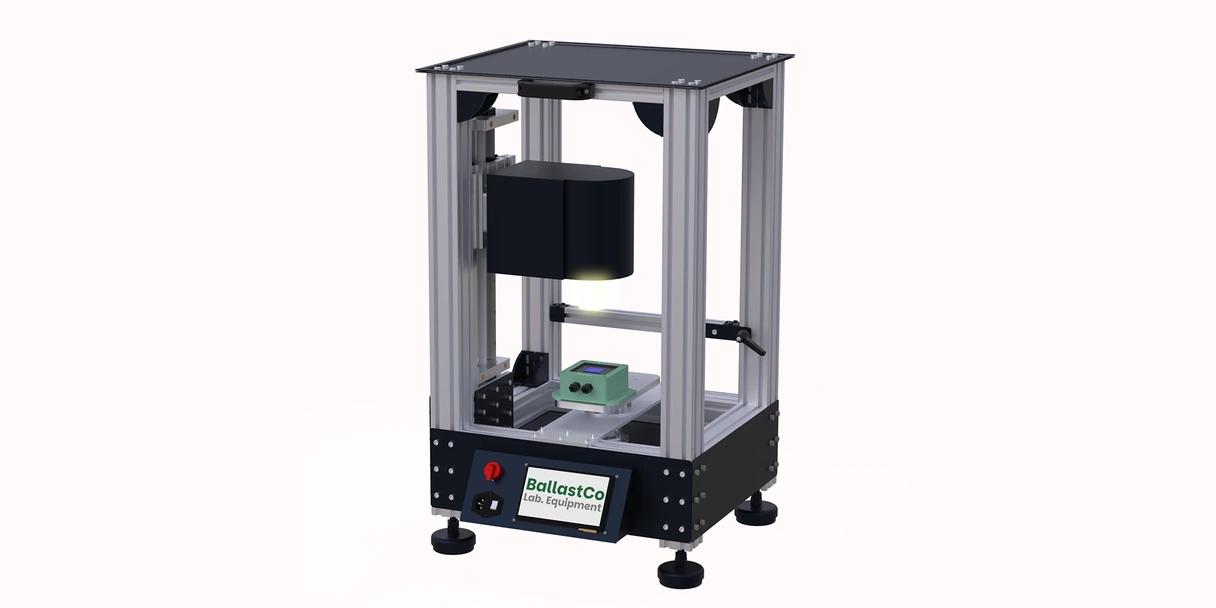
What Is a Solar Simulator?
An environment, or test area, defined as standard test conditions is needed to
determine the properties of cells, which are photovoltaic elements used in the
production of solar panels, and to carry out tests. Standard test conditions
cannot be provided in outdoor studies because environmental conditions are
constantly changing.
Solar simulators create a stable artificial light source by imitating some
properties of natural sunlight in a laboratory environment. The properties of
this artificial light source, such as homogeneity, intensity, and spectrum
range (wavelength), are very close to natural sunlight in terms of these
properties. In other words; it is an artificial light source that has the
properties of natural sunlight and is used in a laboratory environment.
With the help of these systems and devices, tests can be carried out under
standard test conditions independently of outdoor conditions.
What Are Solar Simulators Used For and Why Are They Used?
Solar simulators are used to create the conditions defined as standard test
conditions, , AM 1.5 G and 1000 W/m2 in a laboratory environment. In this way,
the properties of solar cells, which are photovoltaic elements, are
determined. Their main areas of use can be listed as follows:25^∘ "C"
- Creating Standard Test Conditions: It provides 1000 w/m2 irradiance intensity, AM1.5 G spectrum, and a cell temperature of 25° according to IEC standards.
- Obtaining the I-V Curve Characteristics: I-VP_maxIt enables the creation of current-voltage () graphs of photovoltaic cells and panels, and the calculation of maximum power point (), fill factor (Fill Factor), and efficiency values.
- Device Calibration: It is used for the calibration of precision sensors (WPVS reference cell, irradiance sensor, pyranometer) used in efficiency measurements and analyses of Solar Power Plants, in accordance with internationally accepted standards (IEC 60904 and ISO 9847).
- Fault Detection and Quality Control: It is used in quality control steps such as micro-crack detection and checking soldering faults in photovoltaic panel production lines.
- Research and Development and Test Activities: It ensures that repeatable, repeatable, and standard test processes proceed reliably with standard test conditions created in the laboratory environment.
Classification of Solar Simulators
Solar simulators are classified according to the IEC 60904-9 standard, based
on performance criteria. Solar simulators are classified based on 3 main
criteria during classification. These criteria are;
- Spectral Match: It shows how close the device light source is to the AM 1.5G solar spectrum. The evaluation is carried out in the wavelength range between 300 nm - 1200 nm according to the IEC 60904-9:2020 standard.
- Irradiance Homogeneity (Spatial Non-Uniformity): It defines how equal the irradiance intensity values are at different points in the operating area of the device.
- Temporal Instability (Temporal Instability): It indicates the amount of fluctuation in light intensity during the operating time of the device.
Solar Simulator Classification Criteria (IEC 60904-9:2020)
| Criterion | Letter | Measured | Class A+ | Class A | Class B | Class C |
|---|---|---|---|---|---|---|
| Spectral Match (Spectral Match) | 1st Letter | Compliance with AM1.5G reference spectrum (300–1200 nm) | 0.875 – 1.125 times | 0.75 – 1,25 times (up to 25% deviation) | 0.6 – 1,4 times (up to 40% deviation) | 0.4 – 2,0 times (up to 100% deviation) |
| Spatial Homogeneity (Spatial Non-Uniformity) | 2nd Letter | Difference between the brightest and darkest points in the test area | ≤ %1 | ≤ %2 | ≤ %5 | ≤ %10 |
| Temporal Instability (Temporal Instability) | 3rd Letter | Change in light intensity during the measurement period (STI and LTI) | ≤ %1 | ≤ %2 | ≤ %5 | ≤ %10 |
Note: The simulator class is written with three letters (e.g. A+A+A+, AAA,
ABA). The general class is determined by the lowest of the three criteria.
Domestic and National Production
As Argesim Teknoloji, the production of a stable-stabilized solar simulator at
Class AAA level under the BallastCo brand is carried out with domestic and
national resources. You can use the link for technical
information.https://ballastco.net/tr/gunes-simulatoru
Frequently Asked Questions
What is a solar simulator?
Briefly; it is an artificial light source that imitates the spectrum, intensity, and homogeneity, which are properties of natural sunlight.
Is the solar simulator domestically produced?
Yes, the device is produced locally and nationally by the engineers at Argesim Teknoloji company.
Which 3 main criteria are used for classification?
- Spectral Match (Spectral Match)
- Spatial Homogeneity (Spatial Non-Uniformity)
- Temporal Instability (Temporal Instability)
According to which standard are solar simulators classified?
They are classified according to the international IEC 60904-9 standard.
What are standard test conditions (STC)?
1000 W/m² Irradiance intensity, AM1.5G spectrum, and 25 °C cell temperature.
Why is a simulator used?
It is used to create standard test conditions (STC) in a laboratory environment. Thus, it is used in R&D, production, and quality control points.