
Frequently Asked Questions

If you can't find the information you're looking for, please contact us.

BallastCo, a brand of ArGesim Teknoloji A.Ş., designs, manufactures, and sells laboratory equipment including wind tunnels, IPX water-test systems, UV test chambers, climate chambers, and PV lamination machines.

For in-stock items, typical delivery is 1–2 weeks. Lead times for custom builds are project-dependent.

Our professional wind tunnel operates from 0.4 to 45 m/s with ≤1% turbulence intensity, enabling highly precise testing.

All BallastCo equipment comes with a standard 2-year warranty.

Yes. We offer installation, training, and technical support in Türkiye and worldwide.

To turn local strengths into globally scalable, advanced technologies—building solutions that help create a more livable world.

Briefly; it is an artificial light source that imitates the spectrum, intensity, and homogeneity, which are properties of natural sunlight.

It is used to create standard test conditions (STC) in a laboratory environment. Thus, it is used in R&D, production, and quality control points.

1000 W/m² Irradiance intensity, AM1.5G spectrum, and 25 °C cell temperature.

They are classified according to the international IEC 60904-9 standard.

  • Spectral Match (Spectral Match)
  • Spatial Homogeneity (Spatial Non-Uniformity)
  • Temporal Instability (Temporal Instability)

Yes, the device is produced locally and nationally by the engineers at Argesim Teknoloji company.

Environmental tests are tests conducted to measure a product’s durability under various environmental conditions. Factors such as temperature, humidity, UV radiation, water resistance, and corrosion are included in these tests.

To measure product durability, temperature testing, humidity testing, UV aging testing, vibration testing, impact testing, water resistance testing, and mechanical strength testing can be applied. The type of test will vary depending on the product’s intended use.

Yes. By conducting the right tests early on, design and manufacturing defects can be identified in advance. This can significantly reduce costs associated with warranties, service, returns, and product recalls.

Criteria such as compliance with applicable standards, measurement accuracy, reporting infrastructure, technical support, and test capabilities suitable for the product’s intended use should be considered.

BallastCo's new service is the calibration laboratory setup as well as training service offered by the company. The company will assist you in setting up your own calibration capability and providing the training required for pyranometers, reference cells, and solar irradiance sensors calibration.

The abbreviation UV represents Ultraviolet radiation which sunlight produces to cause material deterioration and color deterioration.

The two main standards for UV testing include ASTM G154 and ISO 4892-3 which specify testing protocols and equipment settings.

The testing of solar panels through UV chambers occurs in PV testing environments to evaluate module materials and encapsulants according to IEC 61215 standards, if it fit in the machine.

The test duration depends on the testing goals which can range from several days to multiple weeks to achieve simulated outdoor exposure of multiple years.

The testing process accepts various materials including plastics and paints and coatings and rubbers and adhesives and PV backsheets and sensor housing materials.

Aerodynamic testing is a test performed to understand how a product behaves when it encounters airflow.

These tests are most commonly used in fields such as meteorological sensors, automotive, aviation, defense, energy, and construction.

Because it helps the product operate more efficiently, safely, and stably. It also allows for the early detection of potential problems in the design.

It is important to use this service due to the needs for accurate calibration of sensors. Many organizations cannot rely on an outside lab and have to use the services of such labs. BallastCo offers you a possibility to develop your own internal capabilities.

They are not exactly the same thing. Wind tunnel testing is one of the most common methods of aerodynamic testing. So, aerodynamic testing is a broader concept, and the wind tunnel is just one of the ways to apply it.

Depending on the chosen configuration, the following equipment will be provided: Class AAA sun simulator, sensor delivery mechanism, calibration stand, datalogger, data acquisition software, calibration software, certificate making software, etc.

No. For a product to be successful, its performance against airflow alone is not enough. It must also be resistant to environmental conditions such as water, UV rays, temperature changes, and humidity.

Yes, since BallastCo has indoor calibration capabilities through equipment like the Class AAA sun simulator as per the IEC 60904-9, sensor delivery systems, datalogger support, data acquisition software, calibration software, and certificates preparation software.

Yes, there are. BallatCo is a company that manufactures wind tunnels in Turkey.

Yes, since BallastCo has outdoor calibration capabilities through customized sensor calibration stands and natural sunlight for calibration purposes.

Tests can be conducted up to a speed of 45 m/s using BallatCo Wind Tunnels.

Yes, the calibration laboratories’ program can be set for indoor calibration, outdoor calibration, or both depending on the customer’s application, laboratory space, and preferences.

The price of a BallatCo High-Precision Wind Tunnel ranges from 15,000.00 to 25,000.00 Euros.

Yes, since BallastCo offers training services that include theoretical training as well as hands-on practical training.

Training can be carried out at BallastCo ArGesim production facilities in Türkiye or even at the client’s site.

In this regard, the program is based on the following international standards – ISO 9847:2023, IEC 60904-2:2023, IEC 60904-4:2019, IEC 60904-9:2020, and ISO/IEC 17025:2017.

In this case, total expenses for BallastCo’s training and equipment program might pay off through the first 100 to 200 calibrations of irradiance sensor or pyranometers depending on external calibration fees, delivery cost, custom duties, calibration number, and other factors.

However, after the point where all investments have been recovered, each new calibration can bring additional benefits since the company utilizes laboratory equipment, trained personnel, software, and internal workflow rather than pay for every single calibration externally.

Certainly, not. BallastCo offers much more services than equipment supply alone. It may provide assistance in laboratory design, development of workflow, provision of software, documentation services, certificate preparation, training, and daily operations management.

Yes, existing laboratory equipment can be used provided that it fulfills technical requirements for laboratory setup.

Recalibration is essential to ensure accurate measurements, reliable results, and consistency in solar monitoring, PV testing, and performance assessment.

The recalibration of sensors through outsourcing entails several factors, which could lead to high-cost estimates such as recalibration charges, shipment expenses, customs, insurance, administration, downtime, etc. The costs would be higher depending on the number of sensors that will undergo calibration.

Sending your sensors to an external PV lab will be ideal if the number of sensors is not too many, while creating a laboratory will provide benefits in the long run if the number of sensors is huge or if there is a need to calibrate them repeatedly.

Calibrating large numbers of sensors may require costs such as calibration charges, transportation, customs, logistics, and downtime. In some cases, the total cost can exceed the investment needed to establish an internal calibration laboratory with BallastCo’s equipment and training support.

With BallastCo, a company can receive a full turnkey service for calibration lab set up, including the provision of equipment, calibration software, certification program, indoor/outdoor calibration processes, documentation preparation, and training.

Depending on the price for external calibration, shipping, customs fees, number of sensors to calibrate, etc., the payback period for investing in BallastCo's training and equipment would be around 100–200 sensors for calibration.

The laboratory will keep generating benefits by providing further recalibrations for other sensors produced in different years, future sensor batches, replacement sensors, etc.

Yes. The program of BallastCo enables calibration of pyranometers, irradiance sensors, and reference cells depending on the chosen configuration of the laboratory.

Yes. BallastCo is able to supply indoor calibration equipment like a Class AAA sun simulator, sensor delivery device, datalogger, software for calibration, data acquisition software, and software for certification.

Yes. BallastCo is able to use customized sensor calibration stands and sunlight-based calibration process for outdoor calibration.

The standards that are applied by the calibration laboratory program include ISO 9847:2023, IEC 60904-2:2023, IEC 60904-4:2019, IEC 60904-9:2020, and ISO/IEC 17025:2017.

No. Calibration laboratory represents an investment in technology that can help with future recalibrations, quality control, customer service, tests, and future purchases of sensors.

Companies with regular recalibration needs, large sensor quantities, solar monitoring projects, PV testing operations, irradiance sensor inventories, or recurring pyranometer calibration requirements should consider building an in-house calibration laboratory.

BallastCo wind tunnel tests are used to evaluate strength and performance in systems that are directly affected by wind load.

BallastCo provides technical service for all test equipment, including installation and support for any issues that may occur afterward.

Key specifications of the BallastCo Wind Speed Tunnel include: air speed 0.4–45 m/s, turbulence ratio <1%, a 60 × 120 × 60 cm transparent test chamber, 18.5 kW fan power (52,000 m³/h), stainless flow-straightener mesh, a silencer for quiet operation, an inlet cone and diffuser system, 380V electrical connection, and adjustable speed control.

In short: materials are prepared, layers are arranged, then the lamination process is performed, and final inspections are completed. One of the most critical stages is the lamination process, where the layers are transformed into a single module.

Because the panel’s durability and longevity depend largely on this stage. Proper lamination ensures the layers bond together smoothly.

The mini PV lamination machine works with glass, EVA, solar cells, and the backsheet. It is also compatible with glass-backsheet and glass-glass modules.

The temperature range of the BallastCo Lamination Machine is between 0 °C and 200 °C. This provides a flexible and controlled production process.

The PV lamination process takes approximately 15 minutes. The preheating time is approximately 20 minutes.

Vacuum prevents air from remaining between the layers. This makes the panel stronger and of higher quality.

Durability tests are conducted to determine how reliable and long-lasting industrial products are under real-world operating conditions.

The most commonly applied durability tests for industrial products include vibration tests, temperature and humidity tests, mechanical strength tests, life cycle tests, and corrosion tests.

Durability tests are used in many sectors, primarily the automotive, aerospace, energy, defense, electronics, manufacturing, and machinery industries.

Durability testing helps identify a product’s weaknesses, thereby contributing to the improvement of design and manufacturing processes. This enables manufacturers to develop more reliable, long-lasting, and high-performance products. It also enhances customer satisfaction and ensures the product’s compliance with international quality standards.

They are typically caused by insufficient vacuum, incorrect temperature settings, or air trapped between layers.

It is the separation of PV module layers over time.

They can be prevented by using the correct temperature, sufficient pressure, stable vacuum, and appropriate EVA.

Yes. Precise vacuum, temperature, and pressure control directly affect the quality of photovoltaic (PV) cells.

Due to its laboratory-type design, it offers space-saving benefits. It provides high vacuum performance, precise temperature control, a PLC system, and compatibility with various module structures.

The prices for BallastCo Mini PV laminating machines generally range from 5,000 to 10,000 USD.

They must be calibrated to maintain the accuracy of the data received from the sensor and to perform SPP performance analyses accurately.

Based on the relevant IEC standards, it is recommended to be calibrated at least once every 2 years.

Yes, after the laboratory setup is completed, theoretical and practical calibration training is given to the personnel/personnel specified by the company.

Yes, it performs turnkey laboratory installation together with the device, mechanical infrastructure, software, practical and theoretical training.

Yes, a standard-compliant certificate is generated via the software provided by Argesim.

Installation is performed considering ISO 17025, IEC 60904, and ISO 9060 requirements.

Yes. A Class AAA solar simulator solution compliant with IEC 60904-9 can be offered.

The BL-PVL-480 is a PV lamination machine used in solar panel production. It laminates glass, EVA, solar cells, and backsheet into a single module using vacuum, temperature, and pressure.

Standard lamination dimensions are 480 mm x 480 mm. Nonetheless, the dimensions of the laminator can vary according to customer demands.

Yes. This machine has been designed for glass-backsheet modules, glass-glass modules, and composite materials.

The machine uses PLC control system and touchscreen HMI system. It also has PID smart temperature control to maintain steady heat.

The temperature range of the machine is between 0 degrees C to 200 degrees C.

Heating time of BallastCo Lamination Machine is 20 minutes.

The lamination time of BallastCo Lamination Machine is 15 minutes.

Resistance heating is used in the BL-PVL-480.

The vacuum limit of BallastCo Lamination Machine is from 70 to 90 Pa.

Yes. BallastCo Lamination Machine is a compact solution suitable for laboratory environments.

The main advantages of BallastCo Lamination Machine are high-quality vacuum performance, fast and easy installation, long service life, low noise level, low maintenance need, customer support, and a 1-year warranty.

Calibration should generally be performed annually or at specified intervals, depending on the frequency of use and the sensitivity of the device.

No. Calibration is performed to ensure measurement accuracy, while testing is used to evaluate a device’s performance and functions.

The correct standards should be used during calibration, and the environmental conditions should be suitable to ensure accurate measurements.

Test results can be highly reliable when appropriate standards and test conditions are used. However, every test has specific limitations.

The duration of calibration varies depending on the type and complexity of the device. It may take anywhere from a few hours to several days.

For indoor installations, we provide a sun simulator, sensor mounting equipment, data logger software, data collection infrastructure, software for generating calibration certificates, a calibrated reference device, and hands-on training.

A climate chamber is a testing enclosure used to evaluate the effects of environmental conditions on biological samples, industrial products, materials, electronic devices, and their components.

UV-related damage often becomes visible under temperature and humidity cycling, such as cracking, swelling, or loss of adhesion. Therefore, even if a UV chamber is used, a climate chamber is also required to observe the full range of effects.

It is not realistic to expect an exact match. The goal is to correctly trigger failure mechanisms and comparatively differentiate products. For this reason, correlation with real field conditions is critical.

You can purchase the Climate Chamber and UV Test Chamber manufactured and sold by BallastCo Laboratory Equipment.

UV Test Device prices generally range from 2,200.00 to 4,100.00 USD.

The Balastco Climate Chamber operating range allows for significant environmental testing with a temperature range of -40°C to 120°C and a humidity range of 20–90%.  The Balatco UV Test Device focuses on accurately measuring UV resistance with programmable UV lamps, timer-controlled test cycles, homogeneous light distribution, and precise temperature-humidity control.

Yes, installation and technical service are available for every test equipment purchased from Ballastco. Please contact us for any purchase-related or technical inquiries.

In indoor installations, we offer a sun simulator, sensor mounting bracket, datalogger software, data collection infrastructure, software for creating calibration certificates, a calibrated reference device, and hands-on training.

On the outdoor side, we provide a customized structure for mounting sensors, datalogger software, data collection infrastructure, software for creating calibration certificates, a calibrated reference device, and hands-on training.

Yes. Training is an important part of both our indoor and outdoor installations. Our goal is not just for the customer to receive the system, but to be able to use it effectively.

It is suitable for companies working in the solar energy field that want to increase measurement accuracy and manage their calibration processes in-house.

The main difference between IPX5 and IPX6 is that water is sprayed onto the device with greater force in IPX6. In other words, the water jet is more “intense” in IPX6. According to the values provided by BallastCo, 12.5 liters per minute of water are used in IPX5, whereas 100 liters per minute are used in IPX6. The IP code defined in IEC 60529 already specifies the degree of protection a product has against liquid ingress.

Using a test chamber strengthens product durability, but it does not prove accuracy on its own. To ensure accuracy, calibration and uncertainty calculations must also be carried out, and measurements need to be performed regularly.

This is because, in wind speed and direction sensors, measurement accuracy is directly related to the quality of the airflow. BallastCo’s wind tunnel system aims to provide controlled and repeatable flow conditions, with a speed range of 0.4–45 m/s and turbulence levels below 1%.

Yes, installation and technical service are available for all test equipment purchased from Ballastco.  Please contact us for any purchase or technical information requests.

The prices of IP test devices generally fall within the range of USD 7,000.00 – USD 12,000.00.

Although it varies depending on the sensor type, usage conditions, and manufacturer recommendations, calibration is recommended once every two years for most meteorological sensors.

Pyranometers measure solar radiation, and this data is used in solar energy production calculations. Without calibration, energy production estimates may be inaccurate.

Wind sensors are typically measured at different speeds and directions using wind tunnel tests and compared to reference systems.

A calibration certificate is an official document that shows the standards according to which the device was tested, measurement errors, uncertainty values, and calibration values.

If calibration is not performed, measurement errors in sensors increase, and this situation can negatively affect the accuracy of energy production calculations, meteorological analyses, and research results.

Calibration is not the same as adjustment. Calibration is the process of checking how accurately a device measures and documenting this. Adjustment, on the other hand, is intervening to bring the device's measurement closer to the correct value when necessary.

For BallastCo Calibration Services:
  • The calibration fee for a thermopile pyranometer is 180 Euros.
  • The calibration fee for a radiation sensor is 165 Euros.
  • The calibration fee for Wind Speed and Direction Sensors is 75 Euro and 55 Euro, respectively.

A turnkey calibration laboratory installation refers to a solution that will assist a company in setting up their calibration laboratory. This can include equipment, software, lab design, calibration process flow, documentation assistance, certificate creation software, and training.

Building your own calibration laboratory will decrease reliance on other calibration services, shorten response time, increase quality control, lower costs, and provide opportunities for technical know-how in your company.

Required equipment may include a reference sensor, sun simulator, sensor positioning apparatus or calibration frame, datalogger, data collection software, calibration software, and certificate generation software. BallastCo can supply major equipment and assist based on the chosen option.

Yes. BallastCo offers support for building a pyranometer calibration laboratory.

Yes. BallastCo can assist in creating a reference cell calibration laboratory with appropriate equipment and software.

Yes. BallastCo is capable of supplying indoor calibration equipment such as the Class AAA solar simulator according to IEC 60904-9, sensor delivery system, dataloggers, software, and certification software.

Yes. Outdoor calibration services provided by BallastCo involve custom-built mounts along with solar calibration techniques.

The international standards applied for BallastCo calibration laboratory program include ISO 9847:2023, IEC 60904-2:2023, IEC 60904-4:2019, IEC 60904-9:2020, and ISO/IEC 17025:2017.

Yes. Theoretical and practical training programs are provided by BallastCo for calibration laboratories. Training sessions can take place either at the ArGesim manufacturing plant in Türkiye or at the client's site.

Yes. Each laboratory can be individually customized taking into consideration sensor type, calibration scope, room availability, technology objectives, existing laboratory equipment, as well as indoor and outdoor calibration preferences.

In general, the sum of expenses associated with the BallastCo training and equipment kit may prove beneficial for about 100 to 200 calibrations of irradiance sensors or pyranometers, considering external calibration costs, shipping fees, customs clearance...

From the moment of recoupment, each following calibration will become more economically advantageous due to the use of laboratory equipment and staff training by the company itself rather than repeatedly paying for external calibration services.

Absolutely. The use of a calibration laboratory enables solar companies to enhance accuracy, facilitate photovoltaic (PV) testing, calibrate irradiance sensors, boost quality control, and offer improved technical support to their customers.

For this purpose, it is necessary to outline the scope of your calibration activities, sensors that require calibration, equipment at your disposal, laboratory premises, and whether indoor or outdoor calibration, or both, are required.

Cabin Interior Dimensions: 510mm x 510mm x 710mm (W x L x H)

Cabin Exterior Dimensions: 782mm x 1032mm x 1066mm (W x L x H)

The delivery time is 4 weeks.

The warranty period is one year against manufacturer defects.

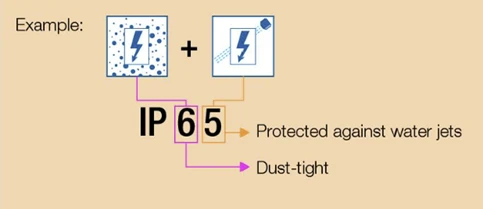
Dust proofing (6) and protection against water jet streams (5). No immersibility is guaranteed.

No. IPX7 refers to temporary immersibility. Continuous immersibility is achieved by IPX8 rating under defined conditions.

No, as the IP ratings are test-based claims (according to EN 60529).

With the help of water jet testing apparatus, which provides flow rate and other required parameters and after inspection for any ingress, e.g., BallastCo’s IPX5/IPX6 Water Ingress Test Equipment.

The testing environment uses controlled air flow to study how objects react to aerodynamic forces.

The wind tunnel serves multiple industries which include automotive and aerospace and aerospace and construction and renewable energy sectors.

The system generates wind speeds and turbulence patterns which match actual outdoor conditions to produce accurate test results.

The system enables precise measurement of air velocity and pressure and turbulence and force coefficients which include drag and lift values.

The system provides precise results through its flexible design and reliable operation which stems from advanced technology and strong engineering principles.

Dimensions (Closed): 72.5 cm x 75 cm x 100 cm (W x L x H)

Dimensions (Open): 72.5 cm x 75 cm x 145 cm (W x L x H)

The warranty period is one year against manufacturer defects.

The PV lamination machine, developed by BallastCo, produces long-lasting and durable panels by bonding layers of photovoltaic modules together using heat and pressure. Its small and compact design makes it suitable for use in laboratories and university research, and it can also be customized to specific panel sizes.

  • Controllable heating system
  • High-precision vacuum chamber
  • Flexible membrane system
  • PLC touch interface

It is 165 kg.

"IP" means Ingress Protection. The “X” means dust protection isn’t being tested, while the number (5 or 6) indicates the product's water resistance level.
No. IPX5 and IPX6 only test protection against water jets and rain. For swimming or submersion, products require higher ratings like IPX7 or IPX8.

Depending on the standard, each side of the product is usually sprayed for a few minutes. It is meant to simulate realistic outdoor exposure.

We test outdoor electronics, garden lamps, security cameras, automotive components, and some household appliances.

It is important so that water hits each part of the product. The rotation guarantees that no side is left untested.

Not exactly. It means the product passed a rigorous lab test. In everyday use, some elements may still cause damage over time, but the test offers strong proof of the product's durability.

IPX6 uses water jets at eight times the flow of IPX5, simulating harsher exposure such as pressure washing or storms.

All machines are proudly manufactured in Türkiye, at BallastCo’s dedicated production facilities.

BallastCo offers a 1-year warranty against manufacturer defects.

Standard delivery is 4 weeks from order confirmation.

Yes. Test cabins, nozzle setups, and flow controls can be adapted to customer requirements.

Yes. In our optics and wind labs, we provide calibration for irradiance sensors as well as wind speed and direction sensors.

Our device complies with IPX1 / IPX2 / IPX3 / IPX4 / IPX5 / IPX6 waterproof testing standards. Depending on the test to be performed, the accessories can be easily changed manually, the flow rate can be adjusted, and it offers a complete solution with its rotating table.

Absolutely. Our engineering team develops project-specific solutions and can tailor designs to your exact requirements.