What Is Aerodynamic Testing? In Which Industries Is It Used?
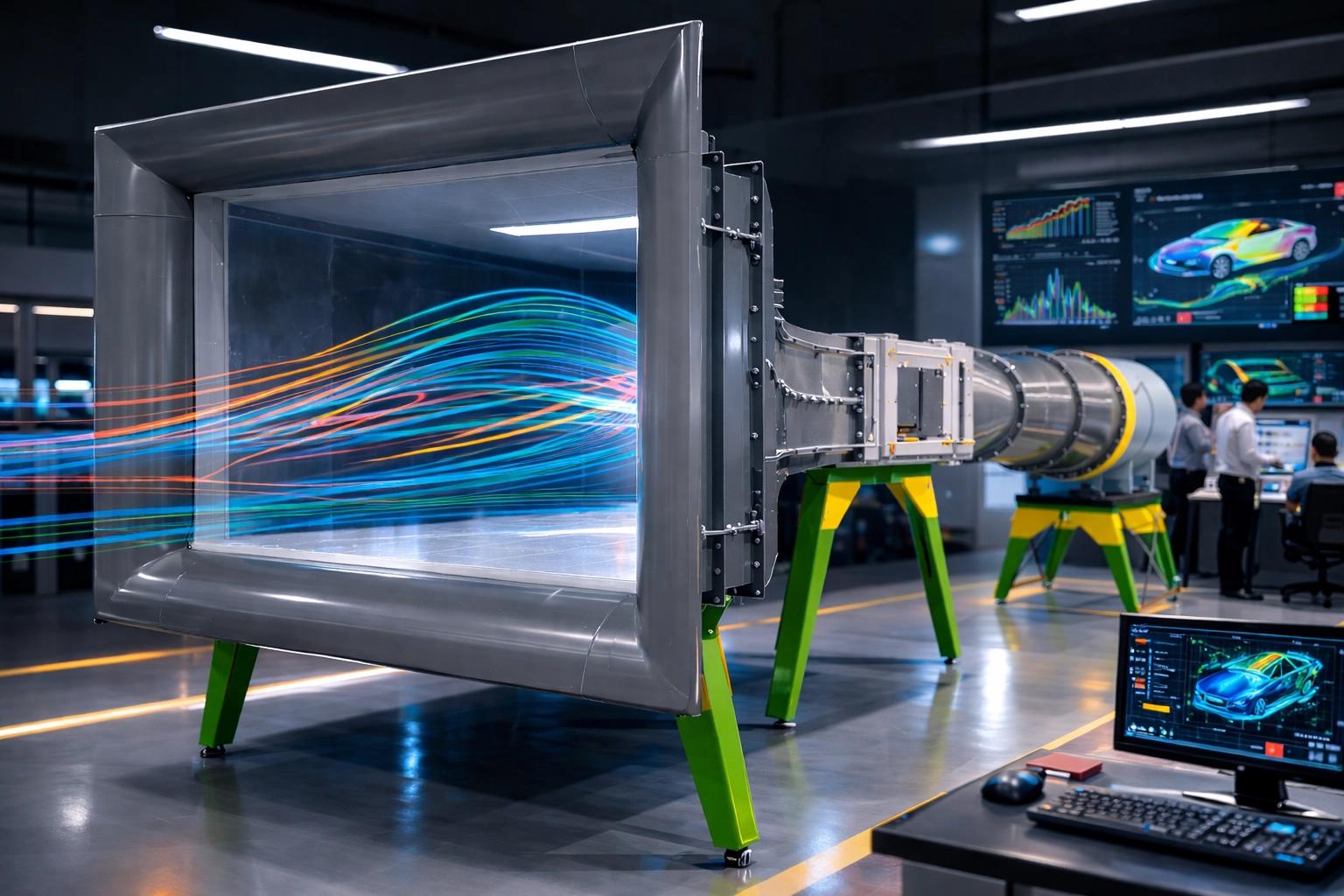
When developing a product intended for outdoor use, it is not enough for it to simply be durable or look good. How the product interacts with the air is just as important. This is because it directly affects performance, energy consumption, and user comfort. Aerodynamic testing is done precisely to understand this.
In short, aerodynamic testing is the process of examining the behavior of a product or system under airflow. In this process, many factors such as wind resistance, drag force, lift effect, turbulence, and pressure distribution are evaluated. One of the best-known applications of these tests is the wind tunnel. BallastCo also has a High-Precision Wind Tunnel System with a low-turbulence and transparent test chamber in this field.
Why is Aerodynamic Testing Performed?
A product's development may look good on paper. However, what matters is how it behaves under real-world conditions. This is precisely the purpose of aerodynamic testing. It's about observing the product's interaction with the air, identifying its weaknesses, working on them, and making it more efficient. Thanks to these aerodynamic tests, the product or sensor can:
• Reduce air resistance
• Increase energy or fuel efficiency
• Improve high-speed stability
• Identify noise and vibration problems
• Improve safety and overall performance
These tests provide significant benefits, especially in sectors such as meteorology, automotive, aviation, and defense.
How to Conduct an Aerodynamic Test?
The method of conducting an aerodynamic test can vary depending on the product being tested. However, the process is generally similar.
1. The product to be tested is selected. This product is sometimes full-sized, and sometimes a small-scale model is used to fit into the tunnel.
2. The test environment is created. A wind tunnel is often used in this stage. Thanks to the controlled airflow, how the product reacts is observed.
3. If available, sensors and measurement systems inside the tunnel are activated. Data such as pressure, speed, vibration, force, and airflow direction are monitored with various sensors.
4. The data is analyzed. Based on the results obtained from the analysis, improvements are made to the design. If necessary, the test is repeated.
What are the Types of Aerodynamic Tests?
Aerodynamic tests can be applied in different ways depending on the need.
Wind Tunnel Tests
This is one of the best-known methods. The behavior of the product under controlled airflow is measured. For more information, you can follow our previous article on Wind Tunnels.
CFD-Supported Tests
Computer-aided flow analyses are evaluated together with physical tests. This approach can provide advantages in terms of time and cost.
Pressure and Flow Analyses
Pressure changes, air direction, and turbulence on the product surface are examined.
Noise and Vibration Tests
The effects of sound and vibration, especially those occurring at high speeds, are evaluated.
Advantages of Aerodynamic Testing for Companies
Aerodynamic tests not only provide companies with technical data, but also make the product development process more robust. This allows for:
• Early detection of problems, preventing significant costs that might arise later.
• More precise and measurable product development thanks to test results. Product quality improves.
• Shortens the trial-and-error process, allowing for more planned development. The R&D process is shortened.
• Tested and verified products build greater customer trust.
• Standard-compliant testing processes provide support in terms of export and certification.
Aerodynamic testing is a crucial part of the product development process today. It's used in many fields, from automotive and aerospace to energy and electronics. Understanding airflow correctly means better performance, greater efficiency, and higher safety.
On the other hand, it's also necessary to demonstrate how the product behaves under real-world conditions. Therefore, alongside systems like wind tunnels, complementary testing solutions such as water tightness, UV resistance, and climate control are becoming increasingly important. For all these complementary solutions, you can visit BallastCo.
Frequently Asked Questions
1. What is aerodynamic testing?
Aerodynamic testing is a test performed to understand how a product behaves when it encounters airflow.
2. In which sectors is aerodynamic testing used?
These tests are most commonly used in fields such as meteorological sensors, automotive, aviation, defense, energy, and construction.
3. Why is aerodynamic testing important?
Because it helps the product operate more efficiently, safely, and stably. It also allows for the early detection of potential problems in the design.
4. Are wind tunnel tests and aerodynamic tests the same?
They are not exactly the same thing. Wind tunnel testing is one of the most common methods of aerodynamic testing. So, aerodynamic testing is a broader concept, and the wind tunnel is just one of the ways to apply it.
6. Is only airflow important in aerodynamic testing?
No. For a product to be successful, its performance against airflow alone is not enough. It must also be resistant to environmental conditions such as water, UV rays, temperature changes, and humidity.
7. Are there any companies in Turkey that manufacture wind tunnels?
Yes, there are. BallatCo is a company that manufactures wind tunnels in Turkey.
8. What is the maximum speed at which tests can be conducted using BallatCo Wind Tunnels?
Tests can be conducted up to a speed of 45 m/s using BallatCo Wind Tunnels.
9. What is the cost of a wind tunnel?
The price of a BallatCo High-Precision Wind Tunnel ranges from 15,000.00 to 25,000.00 Euros.